November 13, 2026 · 9 min read · Eco Roofing Ltd, Nanaimo
If you live in Nanaimo, moss on the roof is not a question of if, but when. Our long wet winters, mild temperatures, and tree-lined neighbourhoods create perfect conditions for moss, and once it takes hold it spreads quickly. A light green dusting on the north side of the roof can turn into thick clumps in a single season, and by the time most homeowners notice it from the ground, the moss is already doing damage.
Moss is not just a cosmetic problem. It holds water against the roofing material, lifts shingle edges, traps damp debris in the gaps, and slowly shortens the life of the roof. Left alone for years, it can lead to leaks, rot in the roof deck, and a roof replacement that comes sooner than it should. The good news is that moss is manageable. With the right removal method and a few prevention habits, most Nanaimo roofs can stay largely moss free. This guide explains what moss does to a roof, how to remove it safely, what never to do, and how to keep it from coming back.
Why moss grows so well on Vancouver Island roofs
Moss needs three things to thrive: moisture, shade, and a surface to grip. Vancouver Island supplies all three in abundance. The rainy season runs from roughly October through April, and roofs here can stay damp for weeks at a time with very little drying weather between storms. Moss absorbs that moisture like a sponge and holds it against the roof surface long after the rain has stopped.
Shade makes the problem worse. Roofs under Douglas fir, cedar, and bigleaf maple get less direct sun, and the north-facing slope of almost any roof stays shaded for most of the day through the winter. Moss grows fastest on those cool, shaded slopes, which is why the north side of a roof often turns green years before the south side shows any growth at all. Overhanging branches add to the problem in two ways: they shade the roof and they drop needles, leaves, and pollen onto it, giving moss spores a damp mat of organic matter to root into.
The roofing material matters too. Asphalt shingles are the most common target because their rough, granular surface gives moss an easy grip, and the limestone filler in some shingles can feed algae and moss growth. Cedar shakes are also vulnerable, because wood holds moisture and moss roots can work their way into the fibres. Metal roofing resists moss better because its smooth surface dries fast and gives spores little to hold onto, but moss can still take hold on a metal roof where debris collects in the seams and valleys. Our guide to metal roofing vs asphalt shingles on Vancouver Island explains how each material handles our wet climate, including moss.
What moss actually does to your roof
The damage moss causes is slow and quiet, which is why it is easy to ignore. The first thing moss does is hold water. A thick mat of moss can stay wet for days after the rain stops, keeping the roofing material underneath permanently damp. Shingles that never dry out age faster, and the constant moisture encourages the growth of algae and lichen alongside the moss.
The second problem is lifting. As moss grows, it pushes up under the edges of shingles and shakes. Once a shingle edge is lifted, wind can catch it and rain can be driven underneath, past the part of the roof that is designed to shed water. Lifted shingles also break the seal between courses, so the roof stops working as a single overlapping surface and starts behaving like a collection of loose pieces.
- Water retention: moss holds moisture against the roofing material for days after rain, speeding up wear and encouraging algae and rot.
- Shingle lifting: moss growing under shingle edges lifts them, breaking the seal between courses and letting wind-driven rain underneath.
- Debris dams: moss traps needles, leaves, and dirt in valleys and along flashings, blocking drainage and forcing water sideways under the roofing.
- Gutter blockage: dead moss and debris wash off the roof and clog gutters and downspouts, causing overflow that can damage fascia and siding.
- Deck rot: years of trapped moisture can rot the roof deck and the ends of rafters, turning a cleaning job into a structural repair.
- Granule loss: moss roots and the cleaning needed to remove heavy growth can strip the protective granules from asphalt shingles, shortening their life.
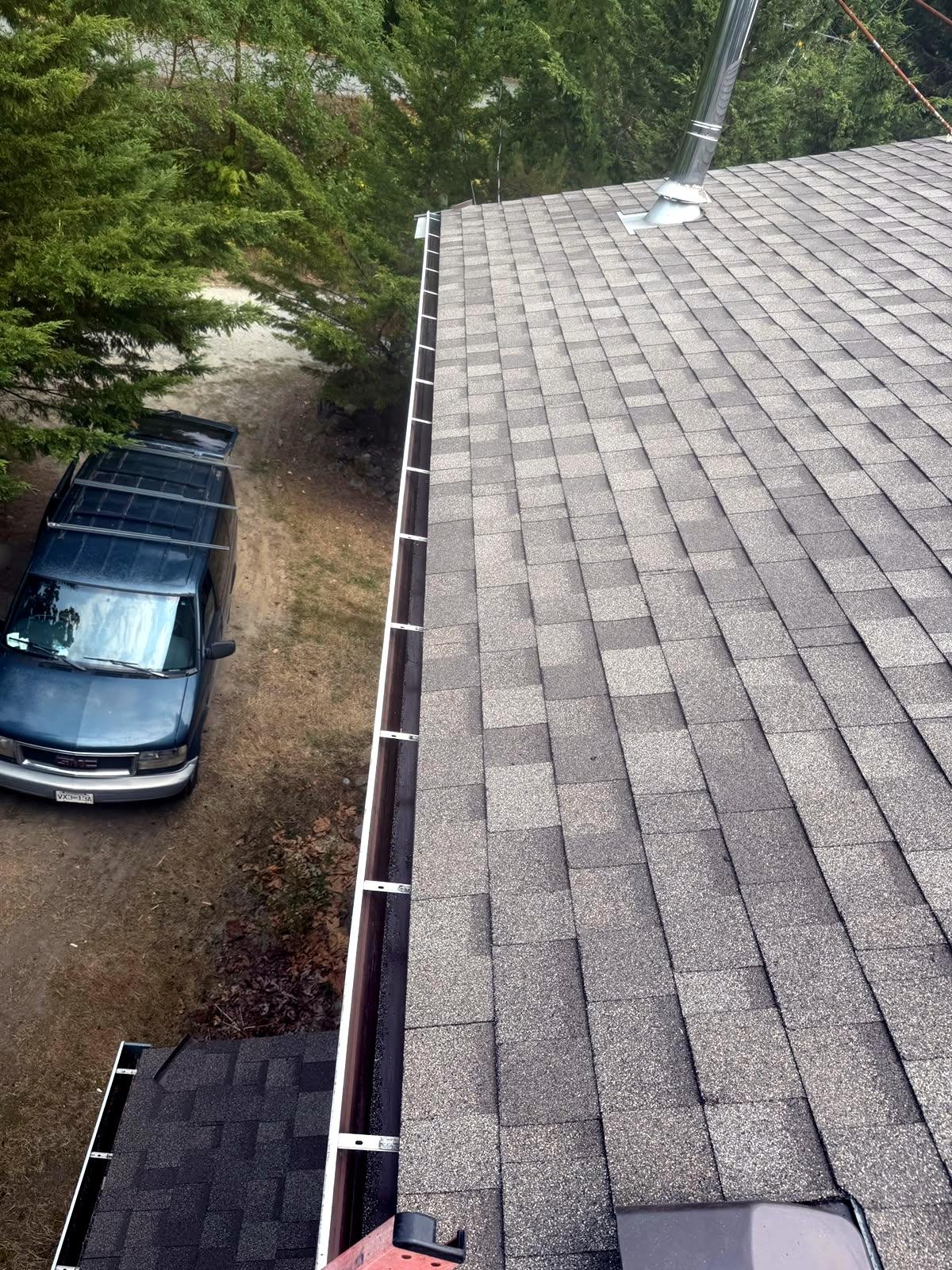
The worst damage usually shows up in the valleys and around chimneys, skylights, and vents, where moss and debris pile up and water has to change direction. Those are also the places where a leak is most likely to start, and where it is hardest for a homeowner to see the problem from the ground. A yearly inspection that includes the valleys and flashings catches moss damage early, while it is still a cleaning job rather than a repair. Our roof maintenance tips for Vancouver Island rain cover the seasonal checks that catch this kind of slow damage before it turns into a leak.
How to remove moss safely
Safe moss removal is slow, gentle work, and the method matters more than the effort. The goal is to kill the moss, let it dry and loosen, and then remove it without damaging the roofing underneath. Rushing the job or using the wrong tool is how a cleaning turns into a repair bill.
The first step is a treatment that kills the moss in place. The most common safe options are zinc sulphate or a commercial moss killer made for roofs, applied on a dry, calm day so the product stays where it is put. A roofer applies it from the ridge down, working in sections, and then leaves it alone. Over the next few weeks the moss turns brown, dries out, and loosens its grip on the shingles. Some homeowners use a diluted bleach solution, but that is a poor choice on Vancouver Island: it can damage metal flashings and gutters, harm plants and soil below the eaves, and it does very little to prevent regrowth, so it is not something we recommend.
Once the moss is dead and dry, it is brushed off by hand with a soft-bristle brush, working down the slope from the ridge so debris falls off the roof instead of being pushed under the shingles. The brush should be firm enough to move the dead moss but soft enough not to strip granules from asphalt shingles or gouge cedar shakes. On a cedar roof the brushing is even gentler, because the wood surface is softer and easier to damage. Loose debris is then cleared from the valleys and gutters so it cannot wash back down and block the drainage.
Timing matters. Late spring or early summer is the best window in Nanaimo, after the heavy rains have eased and before the dry summer weather sets in. The roof is dry enough to work on safely, the treatment has time to work before the fall rains return, and the dead moss can be brushed off while it is dry and loose. A treatment applied in the middle of the rainy season washes off before it can do its job, and brushing a wet, slippery roof is dangerous. If the moss is thick enough to hide the shingles entirely, or if the roof is steep, high, or in poor condition, the safest option is to have a roofer do the work. Roof falls are one of the most common serious home injuries in BC, and no amount of saved money is worth that risk.
What never to do to a mossy roof
Some moss removal methods are so damaging that they cause more harm than the moss itself, and they are still widely sold and recommended. Knowing what to avoid is just as important as knowing the right method.
- Never pressure wash a roof. A pressure washer strips the protective granules off asphalt shingles in seconds, forces water up under the shingles and flashings, and can split cedar shakes. The roof may look clean afterwards, but its service life has been cut by years.
- Never scrape moss off with a metal scraper or a stiff wire brush. Metal tools gouge shingles, tear the surface of cedar, and remove the granules that protect asphalt from UV damage.
- Never walk on a wet, mossy roof. Moss is extremely slippery when wet, and a fall from roof height can cause serious injury. Even on a dry day, walking on a moss-covered roof is a risk best left to a roofer with proper safety equipment.
- Never use undiluted bleach or harsh chemicals. Bleach corrodes metal flashings, gutters, and fasteners, kills the plants and lawn below the eaves, and can stain siding. It also does not prevent regrowth, so the moss comes back just as fast.
- Never ignore moss because the roof still looks fine from the street. By the time moss is visible from the ground, it is usually well established, and the damage underneath is already underway.
If a contractor offers to pressure wash your roof, or to scrape the moss off with a metal tool, that is a reason to get a second opinion. The damage from an aggressive cleaning often does not show up for a year or two, by which time the contractor is long gone and the roof is wearing out years early. A reputable roofer will always recommend the gentle method: treat, wait, brush, and clear. If the moss is so heavy that gentle methods will not be enough, the honest answer may be that the roof is near the end of its life and a roof replacement is the better investment than repeated cleanings. Our guide to the 7 signs you need a new roof in Nanaimo explains how to tell the difference.
The pressure washer test
If anyone offers to clean your roof with a pressure washer, say no. A pressure washer strips granules from asphalt shingles, forces water under the roofing, and can void the shingle warranty. The roof will look clean for a season and wear out years early. Gentle treatment and hand brushing is slower, but it is the only method that removes moss without damaging the roof underneath.
Keeping moss from coming back
Removing moss is only half the job. In Nanaimo's climate, moss will start growing back within a season or two unless something changes about the roof. Prevention is a set of small, steady habits rather than a single fix, and most of them are simple.
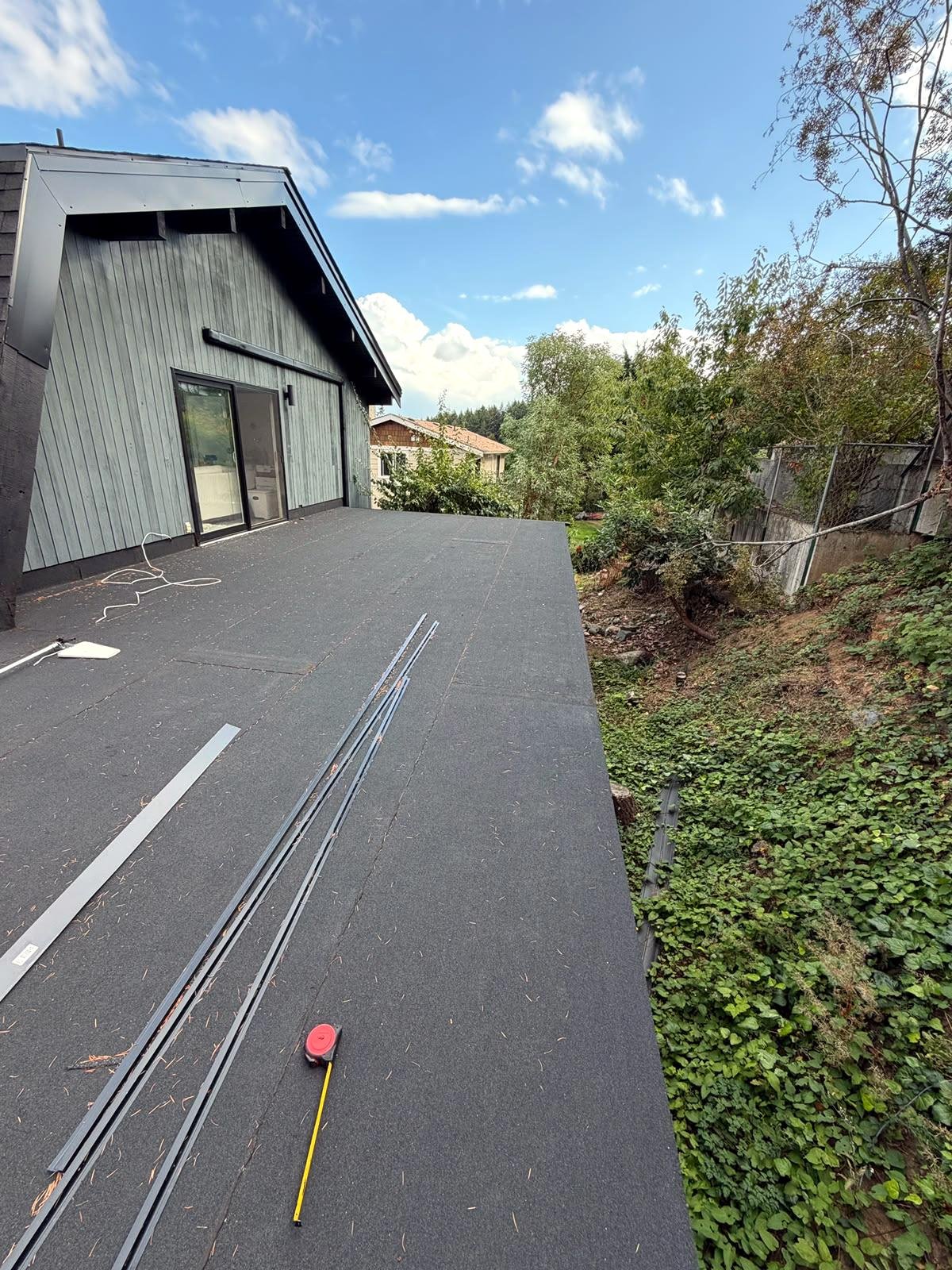
The most effective prevention is zinc. Zinc is toxic to moss, and a small amount of zinc washing down the roof with each rain keeps new growth from taking hold. The traditional method is a strip of zinc metal fixed along the ridge, and many roofers install a zinc strip as part of a roof replacement or a moss treatment. Zinc granules worked into the ridge cap shingles do the same job more discreetly. Copper works similarly, though it is more expensive and can stain light coloured roofing. A zinc strip is not a cure for an already mossy roof, it only slows regrowth after a proper cleaning, but on a clean roof it can keep moss away for years.
Sunlight is the other half of prevention. Trimming back overhanging branches so the roof gets a few hours of direct sun each day dries the surface between rains and makes it much harder for moss to establish itself. Branches should be cut back so they do not touch the roof at all, since contact wears the roofing and drops a steady supply of debris onto it. Keeping the roof clear of needles and leaves matters too: a roof that is swept or blown clear once or twice a year, especially in the fall after the leaves drop, gives moss spores far less to root into. Our guide to how long a roof lasts on Vancouver Island explains how moss, shade, and drainage work together to decide the real service life of a roof.
Gutters deserve attention as part of moss prevention. Clogged gutters overflow onto the fascia and back up under the eaves, keeping the lower edge of the roof damp for days after rain. Clean gutters in the fall and again in the spring, and check that downspouts are clear and draining away from the house. A small annual moss treatment, applied in late spring, is also worth considering for roofs in heavily treed neighbourhoods or on north-facing slopes, where moss pressure is highest. It is a light touch up that keeps a clean roof clean, rather than a rescue job on a roof that has been left for years.
When moss means a bigger problem
Most moss is a maintenance issue, but sometimes it is a warning sign. If moss is growing thickly on a roof that is less than ten years old, or if it is growing on the south-facing slope as well as the north, something else may be wrong. A roof that never dries out can point to poor ventilation trapping moisture under the deck, blocked soffit vents, or a drainage problem that keeps water on the roof surface. Heavy moss on a young roof is worth a proper inspection, because the fix may be ventilation or drainage rather than another cleaning.
Moss can also hide damage. A thick mat of moss can cover cracked or missing shingles, failed flashing, and soft spots in the deck, so a roof that looks mossy but otherwise sound can have problems underneath that only become visible once the moss is removed. That is another reason to have the moss removed by a roofer rather than by a cleaning company: a roofer will look at what the moss was hiding and tell you honestly what it means, rather than just making the roof look clean and leaving.
If a roof is so moss covered that the shingles are no longer visible, or if the moss has been left for many years and the shingles underneath are lifting, curling, or losing granules, a cleaning may not be enough. At that point the honest advice is usually to plan for a replacement, and to make moss prevention part of the new roof from the start: a zinc strip at the ridge, trimmed branches, and a cleaning schedule. A new roof installed over the same shady, debris covered conditions will grow moss just as fast as the old one did unless those conditions change.
Getting moss off your roof in Nanaimo
Moss is part of living on Vancouver Island, and it does not have to mean a new roof. Caught early and removed gently, it is a maintenance job. Left for years, it becomes a repair job, and eventually a replacement. The difference is usually just a yearly look at the roof, a treatment when the green starts to show, and a roofer who knows the difference between cleaning a roof and damaging one.
Eco Roofing Ltd removes moss safely and inspects the roof underneath across Nanaimo, Parksville, Duncan, Ladysmith, and Qualicum Beach, using the gentle treat and brush method, never a pressure washer. We also install zinc strips and advise on trimming and drainage so the moss stays away. If your roof is turning green, or you are not sure what the moss is hiding, request your free quote or call (250) 240-3684 and tell us what you are seeing. We will look at the roof, explain what we find in plain language, and tell you honestly whether it needs a cleaning, a repair, or nothing at all.
Not sure what your roof needs?
Get a free inspection and an itemized written quote. No obligation, no pressure, just a straight answer from a local Nanaimo roofer.