October 22, 2026 · 8 min read · Eco Roofing Ltd, Nanaimo
If you live on Vancouver Island, your roof works harder than roofs in most parts of Canada. From October through March, steady rain, wind-driven drizzle, and the occasional fierce coastal storm test every shingle, seam, and gutter on your home. That does not mean your roof is doomed to leak. It means a little regular attention goes a long way. Most of the serious roof problems we see in Nanaimo start as small, preventable issues: a gutter that slowly filled with needles, a patch of moss left to spread, or flashing that loosened over a few wet winters. A seasonal routine catches those problems while they are still cheap and easy to fix.
Why Vancouver Island Roofs Take Extra Punishment
The Island climate is uniquely tough on roofing. Rain does not just fall straight down here. Wind pushes it sideways, under shingle edges and into tiny gaps around vents and chimneys. Trees are everywhere, so roofs collect needles, leaves, and branches that hold moisture against the surface long after the rain stops. And because our winters are mild and damp rather than cold and dry, moss and algae thrive almost year round. None of this is a reason to worry, but it is a reason to be proactive. A roof that gets two good checkups a year will almost always outlast one that is ignored until water shows up on a ceiling.
Your Fall Roof Maintenance Checklist
Fall is the most important season for roof care on the Island. You want everything clean, sealed, and draining properly before the heaviest rain arrives. Set aside a dry weekend in October or early November and work through these jobs. If you are not comfortable on a ladder, a professional inspection covers all of this in one visit, and Eco Roofing Ltd offers free inspections across Nanaimo and the surrounding communities.
Clean the Gutters and Downspouts
Clogged gutters are the number one cause of preventable roof and fascia damage we see. When gutters back up, water pools at the roof edge, soaks into the fascia boards, and can work its way under the first course of shingles. In a Nanaimo autumn, fir needles and maple leaves can fill a gutter in weeks. Scoop out the debris, flush the gutters with a hose, and check that downspouts are clear all the way to the ground. Water should flow freely and drain away from your foundation, not pool beside the house. If your downspouts discharge into a drain tile or dry well, make sure those outlets are not buried under leaves or soil.
Deal With Moss Before It Takes Hold
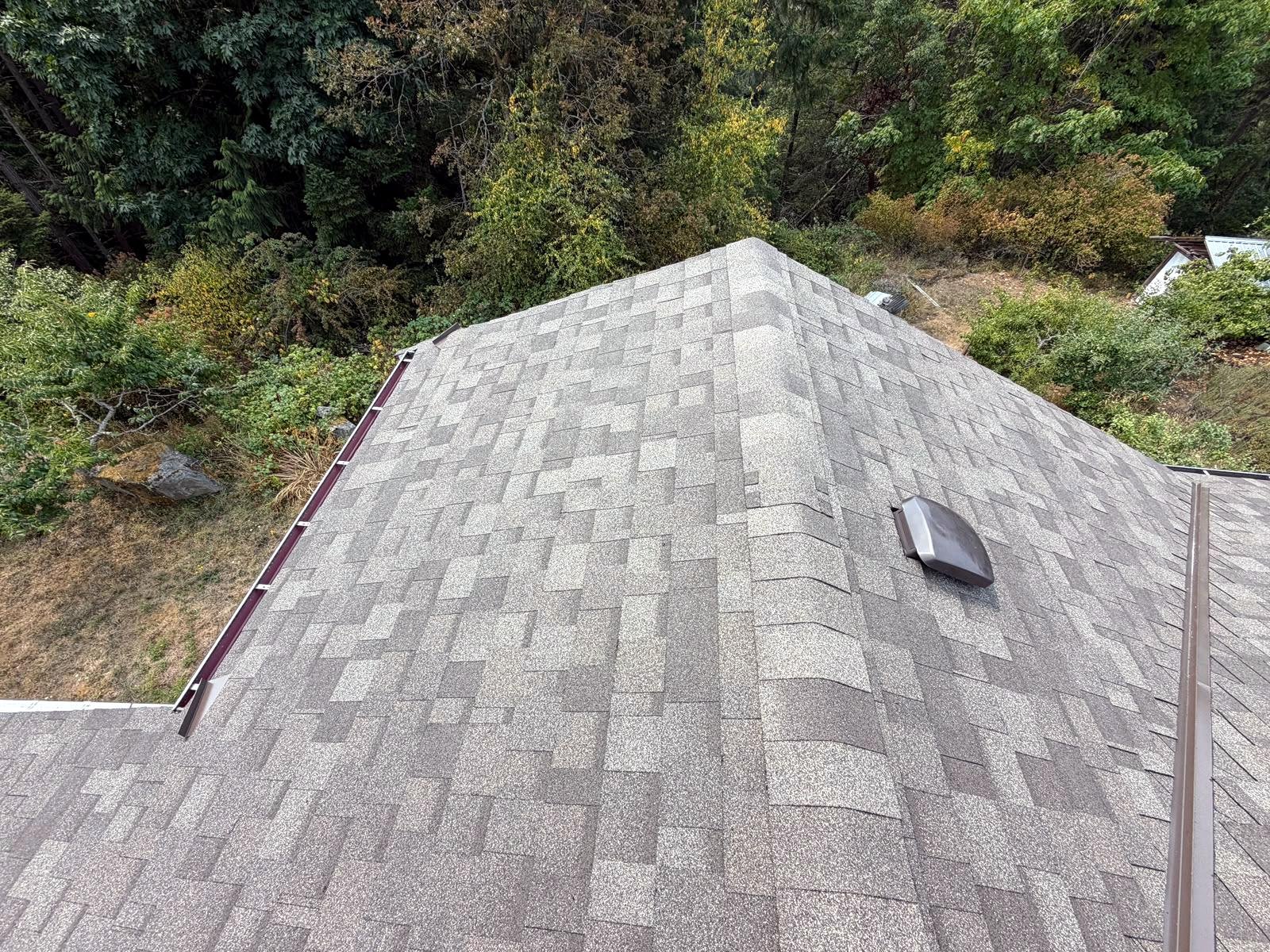
Moss is more than a cosmetic problem. It holds water against your shingles, and in freezing weather that trapped moisture can lift shingle edges and crack the surface. On north-facing slopes and shaded sections, moss can spread surprisingly fast. The good news is that early moss is easy to handle. Treat it before it forms thick mats, and never use a pressure washer on your roof. High pressure strips the protective granules off asphalt shingles and shortens their life dramatically.
- Brush off loose moss gently with a soft-bristle brush, working from the top down so you do not lift shingle edges.
- Apply a moss treatment made for roofs, following the product instructions, and let the rain wash the dead moss away over the following weeks.
- Trim back branches that shade the roof all day, since shade and trapped moisture are what moss loves most.
- Consider zinc or copper strips near the ridge on roofs that battle moss every year, as rainwater washing over the metal helps discourage regrowth.
- If moss is thick, widespread, or growing under shingles, get a professional opinion before you start pulling at it.
Check Flashing Around Chimneys, Vents, and Skylights
Flashing is the metal that seals the joints where your roof meets something else: a chimney, a plumbing vent, a skylight, or a wall. These joints move slightly as the house expands and contracts, and sealant ages, so flashing is one of the most common leak sources. From the ground with binoculars, or from a ladder if you are comfortable, look for flashing that has lifted, rusted, or pulled away, and for cracked or missing sealant. Do not try to reseal a chimney flashing yourself if the chimney is tall or the roof is steep. A roofer can reseal or replace flashing quickly, and it is one of the cheapest leak repairs there is when caught early. If your home has an older chimney or skylight, ask about it specifically during a free roof inspection.
Spring Checks: What Winter Left Behind
Once the worst of the winter rain has passed, usually in March or April, do a second round. Winter storms can loosen shingles, drop branches, and push debris into valleys and behind chimneys. Walk around the house and look for shingles on the ground, dented gutters, or new stains on your soffits. Check the valleys, the V-shaped channels where two roof slopes meet, because debris collects there and forces water sideways under the shingles. Clearing a valley takes minutes and prevents a very common leak. Spring is also the right time to look at your roof from inside the house, which brings us to the attic.
Look Inside: Attic Ventilation and Condensation
Many Island roof problems actually start in the attic. Warm, moist air from your home rises into the attic, and if ventilation is poor, it condenses on the cold underside of the roof deck. Over time that moisture can stain the wood, encourage mould, and rot the deck from the inside out, even while the shingles outside look fine. In spring, take a flashlight into the attic and look for damp spots, dark staining, or a musty smell, especially on the north side. Check that soffit vents are not blocked by insulation and that ridge or roof vents are open. Good airflow keeps the roof deck dry and helps your roof last. If you find damp insulation or stained wood, do not just cover it up. Find out where the moisture is coming from first.
Condensation Is Not Always a Leak
Water stains in the attic do not always mean your roof is leaking. Poor ventilation and bathroom fans venting into the attic are common culprits on the Island. A roofer can tell the difference, and fixing ventilation is often simpler and cheaper than a roof repair. If you are unsure, book a free inspection and ask specifically about attic airflow.
Trim Back Overhanging Branches
Branches that touch or hang over your roof do three kinds of damage. They scrape shingles in the wind, they drop leaves and needles that clog gutters and valleys, and they give moss a shaded, damp place to thrive. They also give raccoons and squirrels a highway onto your roof. Keep branches at least a couple of metres back from the roof surface. If a large tree overhangs your roof, hire an arborist rather than tackling it with a chainsaw on a ladder. While you are at it, check for any trees that look dead or unstable near the house, since a falling limb is one of the most common causes of sudden roof damage in Island windstorms.
After a Storm: A Quick Roof Check
After any serious windstorm, do a fast ground-level check before you forget about it. You do not need to climb up. Walk around the house and look for the obvious signs, then decide whether you need a closer look. If you spot damage, cover any exposed area with a tarp if it is safe to do so, and call a roofer promptly. Small storm damage gets worse fast in the next rain, and emergency roofing help is available when a leak cannot wait.
- Shingles or pieces of flashing on the ground around the house.
- Shingles that look lifted, curled, or missing from the ground.
- New water stains on ceilings or walls inside, especially after the next rain.
- Gutters that are bent, detached, or overflowing in one section.
- Debris piled in valleys or against chimneys.
- Branches on the roof, even small ones, since they can hide punctures.
What You Can Do Yourself, and When to Call a Roofer
Plenty of roof maintenance is perfectly doable for a careful homeowner, but roofs are also one of the most dangerous places to work. Steep slopes, wet moss, and heights are a bad combination. Be honest about your comfort level and your roof. A single-storey home with a gentle slope is very different from a two-storey house with a steep, mossy roof. When in doubt, stay on the ground and let a professional handle the roof itself.
Safe DIY Jobs
- Cleaning gutters from a stable ladder, with someone footing the ladder.
- Ground-level inspections with binoculars after storms.
- Clearing debris from valleys you can safely reach.
- Trimming small branches from the ground.
- Checking the attic for dampness, stains, or blocked vents.
Jobs for a Professional
- Any work on a steep or high roof, or any roof that is wet or mossy.
- Flashing repairs around chimneys, skylights, and walls.
- Moss removal on large or heavily affected areas.
- Anything involving a suspected leak, since the entry point is rarely directly above the stain.
- Full inspections, which should include the attic, the roof surface, and all penetrations.
The simplest habit of all is to have your roof looked at regularly, even when nothing seems wrong. A professional inspection spots the small stuff, the lifted flashing, the early moss, the blocked valley, before it becomes a leak. Eco Roofing Ltd is a local, licensed and insured company serving Nanaimo, Parksville, Duncan, Ladysmith, and Qualicum Beach, and our inspections are free, with an itemized written quote if any work is needed. If your roof has not been checked in a while, or if you are heading into another Island winter, that one call is the easiest maintenance you will ever do. You can also read about shingle roofing options if your inspection shows your roof is nearing the end of its life, or explore our work in Nanaimo and nearby communities.
Not sure what your roof needs?
Get a free inspection and an itemized written quote. No obligation, no pressure, just a straight answer from a local Nanaimo roofer.