October 30, 2026 · 9 min read · Eco Roofing Ltd, Nanaimo
Ask a roofer how long a roof lasts and you will usually get a range, not a single number. That is not evasiveness, it is honesty. A roof is not a product with a fixed expiry date. It is a system exposed to weather every day of its life, and on Vancouver Island that weather is harder on roofs than in most parts of Canada. Months of rain, moss-friendly shade, coastal wind, and salt air near the ocean all leave their mark.
So the useful question is not just how long a roof lasts in general, but how long each type of roof lasts here, on the Island, and what makes the difference between a roof that fails early and one that keeps going well past expectations. This guide covers the realistic lifespans for the materials we see most in Nanaimo and across Vancouver Island, the local factors that shorten roof life, and the habits that add years to it.
Lifespans by material, in Island conditions
The numbers below are realistic ranges for well-installed roofs in our climate, not best-case figures from a brochure. A roof at the short end of a range usually had a hard life: heavy shade, poor ventilation, or years without maintenance. A roof at the long end was installed well and looked after. Where your roof lands depends on the factors covered later in this article.
Asphalt shingles: roughly 15 to 30 years
Asphalt shingles cover most Island homes, and their lifespan varies more than any other material. Basic three-tab shingles sit at the short end of the range, while architectural shingles, which are thicker and heavier, last considerably longer. On Vancouver Island, moss and moisture are the main enemies of shingles. A shingle roof under heavy tree cover that never gets cleaned will age far faster than the same roof on an open, sunny lot. Asphalt shingle roofing remains the most affordable way to roof a home, and for many homeowners a 20-plus-year service life from shingles is perfectly good value, provided the roof is maintained.
Metal roofing: 40 to 70 years
Metal is the longevity champion for Island homes. A quality standing-seam metal roof commonly lasts 40 to 70 years, which for many homeowners means installing it once and never re-roofing again. Metal sheds rain fast, resists moss, and handles coastal wind well. Its weak points are not the panels themselves but the details: fasteners, flashing, and sealants need periodic checks over such a long life. Metal roofing costs more up front than shingles, but when you spread that cost over 50 years or more, the lifetime value is often the best of any material.
Cedar shake and shingle: roughly 20 to 40 years
Cedar suits the Island look beautifully, and it is a natural fit for many West Coast style homes. But cedar is also the material most sensitive to our climate. It needs to breathe and dry out between rains, so it performs best on steeper roofs with good airflow and sunlight. On a shaded, low-slope roof, cedar stays damp, and damp cedar invites moss, mould, and rot. A well-maintained cedar roof in a good location can reach 30 to 40 years. A neglected one in deep shade may need replacing much sooner. Cedar is a commitment to maintenance, not a fit-and-forget choice.
Torch-on and flat roofing membranes: roughly 20 to 25 years
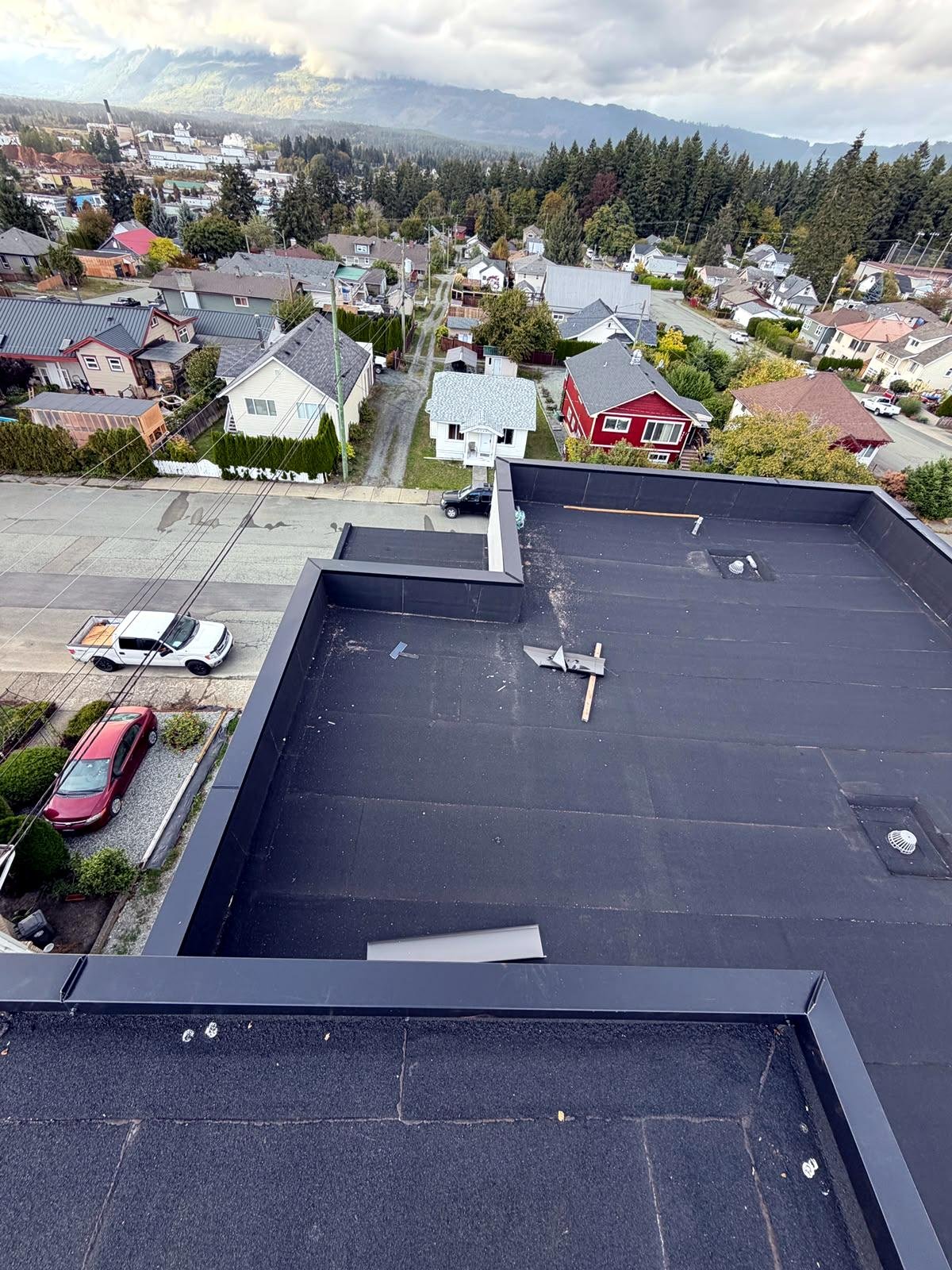
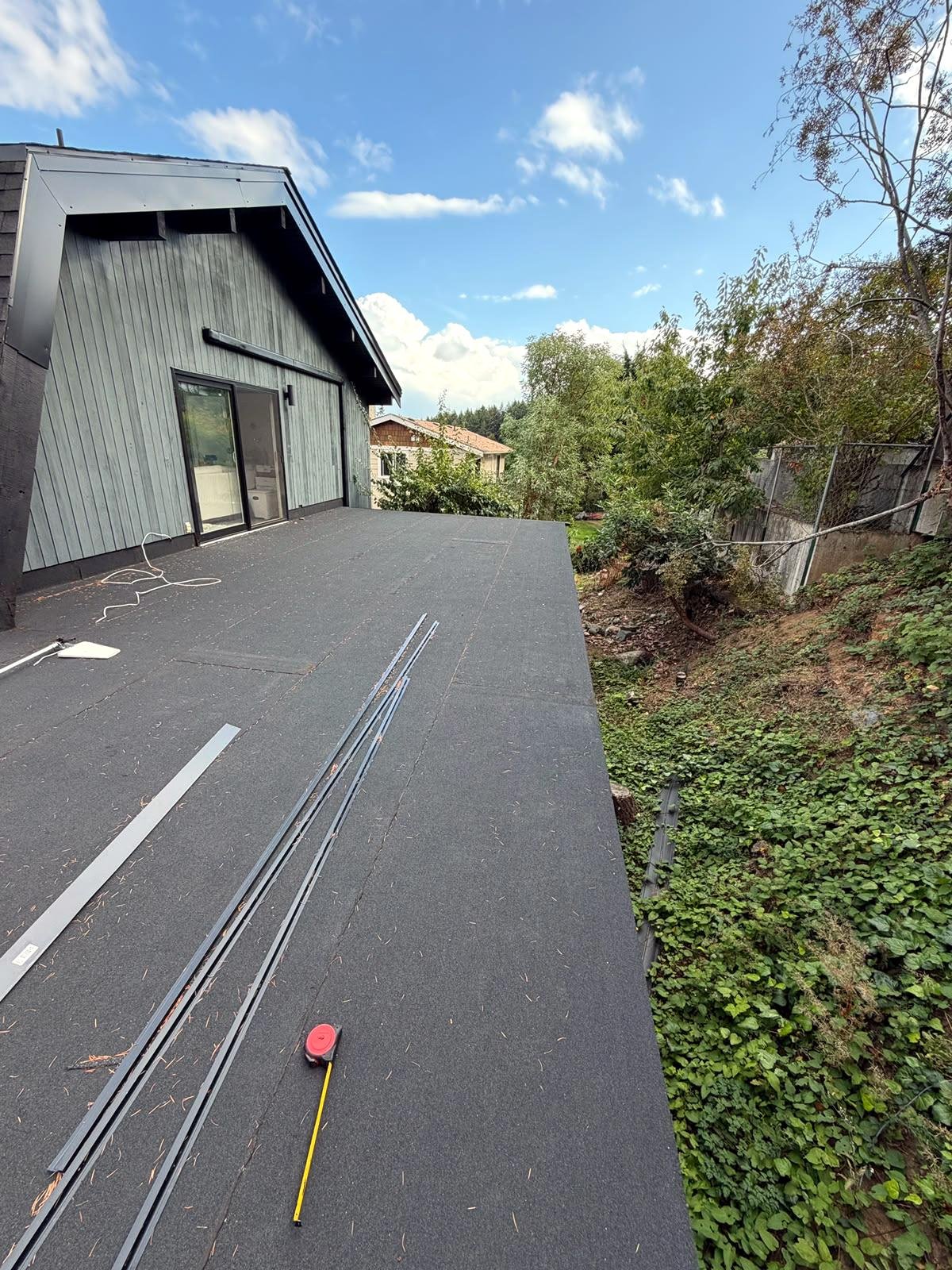
Flat and low-slope roofs use different materials entirely: torch-on modified bitumen membranes or single-ply membranes. These systems typically last around 20 to 25 years when installed correctly and kept clear of standing water. The critical factor for flat roofs is drainage. A flat roof that ponds water after rain will age fast, because standing water breaks membranes down and finds every weak seam. A flat roof with proper slope to drains, clean scuppers, and intact flashing can reach the top of its range. If you have a flat roof, drainage is the thing to watch above all else.
Concrete and clay tile: 50 years and beyond
Tile roofs are less common on the Island but they last a very long time, often 50 years or more. The tiles themselves are extremely durable. What ages on a tile roof is the underlayment beneath them, which may need replacement long before the tiles do, along with flashing and fasteners. Tile is also heavy, so the roof structure must be built or verified to carry the weight. For the right home, tile is a once-in-a-lifetime roof, but it is a specialist installation and not every contractor works with it.
Why Island roofs age faster
The same shingle that lasts 30 years in a dry inland climate may last noticeably less here, and the reasons are all around us. Understanding them helps you protect your roof, because most of the damage is preventable.
Rain, rain, and more rain
Vancouver Island winters bring months of near-constant wet weather. A roof here spends far more of its life wet than a roof in most of the country. Constant moisture accelerates granule loss on shingles, feeds moss and algae, and punishes any flashing detail that is less than perfect. Good underlayment and correct flashing matter more here than in drier climates, because the roof is tested by water so often.
Moss and shade
Moss is the Island roof's signature problem. It thrives in our damp, shaded conditions, especially on north-facing slopes and under tree cover. Moss holds moisture against the roof surface, lifts shingle edges as it grows, and can work its roots under shingles and into the material beneath. Left alone for years, moss does real damage. Kept under control with regular cleaning, it is a minor nuisance. The difference between those two outcomes is simply attention.
Wind and salt air
Coastal wind tests every fastener and shingle edge, especially on exposed waterfront and ridge-top properties. Winter storms can lift poorly secured shingles and drive rain sideways under edges that would never leak in calm weather. Near the ocean, salt air adds corrosion pressure on metal components: fasteners, flashing, and vents. Quality coated materials resist this well, but cheap uncoated metal parts near salt water will not last, and they are often the first thing to fail on an otherwise sound roof.
Freeze and thaw
Island winters are mild compared to the rest of Canada, but we still get freeze and thaw cycles, especially inland and at elevation. Water that gets into small cracks or under shingle edges expands when it freezes, widening the gap a little more each time. Over many winters this slow prying action loosens materials and opens paths for leaks. It is another reason small problems are worth fixing early: a minor repair now prevents a larger one later.
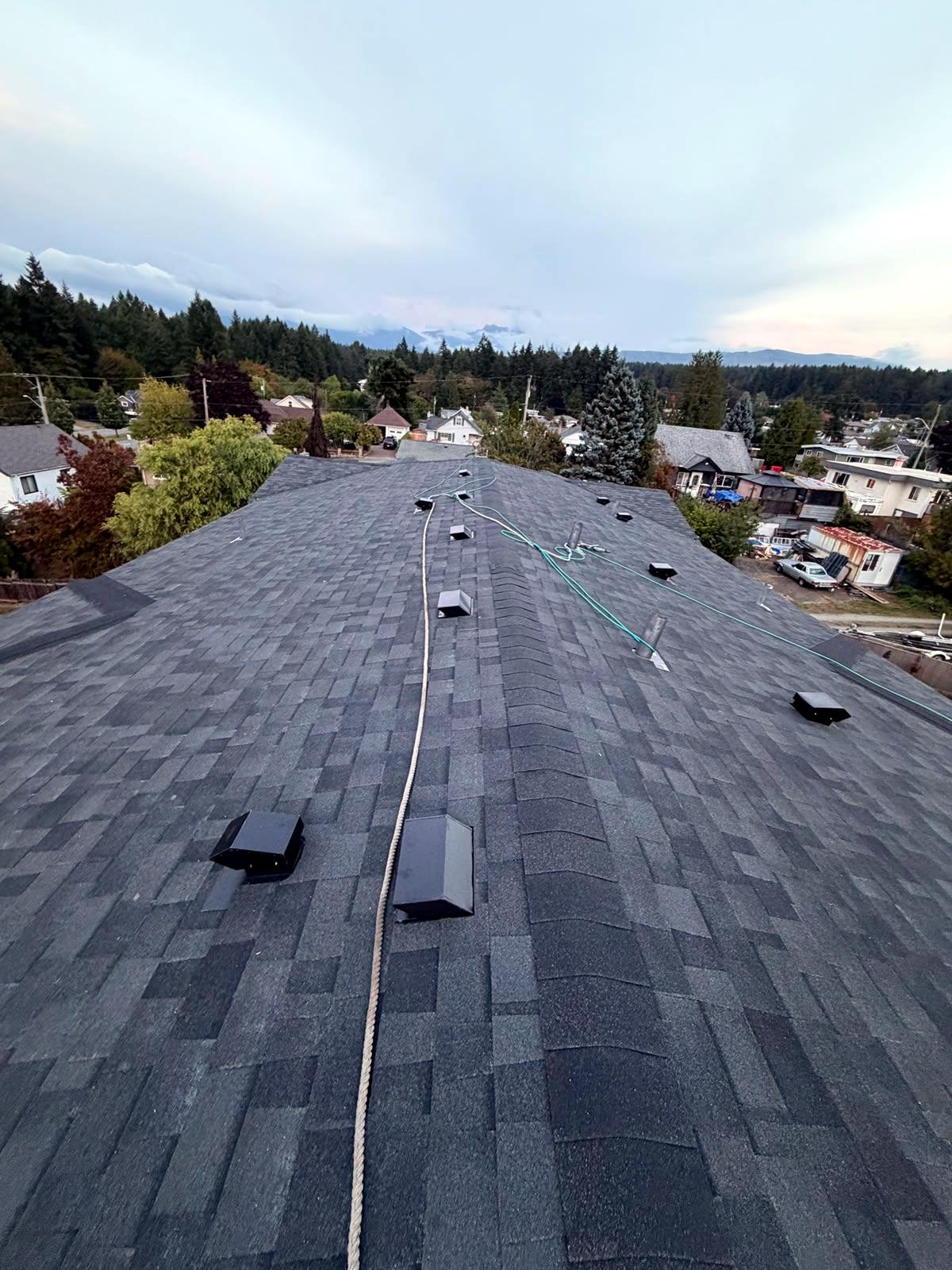
What actually decides how long your roof lasts
Material sets the potential lifespan. These five factors decide whether your roof reaches it.
Installation quality
This is the single biggest factor, and it is also the one you control least after the job is done. A well-installed shingle roof will outlast a poorly installed metal roof. Flashing details, underlayment, fastener placement, and valley work decide whether a roof leaks or lasts, regardless of the material on top. When choosing a contractor, ask who will actually be on your roof, how much experience they have with your material, and what the workmanship warranty covers. A contractor confident in their crew answers these questions directly.
Ventilation
A roof needs to breathe. Without proper attic ventilation, moisture gets trapped, condensation forms under the deck, and shingles age from underneath as well as from above. Poor ventilation can void material warranties, encourage mould, and shorten shingle life noticeably. It is also invisible from the ground, which is why a proper inspection looks in the attic, not just at the roof surface. If your attic feels damp or you see mould or frost on the underside of the deck, ventilation needs attention.
Maintenance
Roofs are not maintenance free, whatever the material. The basics are simple and they make a real difference: keep gutters clean so water drains properly, remove moss before it takes hold, clear debris from valleys, and check flashing and sealants periodically. A roof that gets a quick inspection and clean once or twice a year will almost always outlast an identical roof that is ignored. Most of the premature roof failures we see trace back to years of neglect, not to a bad product.
Sun exposure and slope
South-facing slopes take the most sun and ultraviolet light, which breaks shingles down faster and fades colours. Steeper roofs shed water and debris faster, which helps them last longer, while low-slope roofs hold moisture longer and need more attention to drainage. Neither factor is something you can change, but knowing them tells you where to look: check the south-facing slope and the lowest, flattest sections first when you inspect your roof.
Previous layers and deck condition
A new roof installed over an old one inherits whatever problems the old roof had, and it adds weight to the structure. A tear-off down to the deck lets the crew inspect the wood, replace damaged sections, and install fresh underlayment, which gives the new roof the best possible start. If your deck already has rot or soft spots, covering them up only postpones the problem. This is one reason a full tear-off is usually the better long-term choice, even though it costs more on day one.
Age alone does not condemn a roof
A 25-year-old shingle roof in good condition with a solid deck and proper ventilation may have years of life left, while a 12-year-old roof with poor ventilation and heavy moss may already be failing. Condition matters more than the calendar. Judge your roof by inspection, not by age alone.
Signs your roof is nearing the end of its life
Age is a hint, not a verdict. These are the signs that actually tell you a roof is wearing out: shingles that are curling, cupping, or losing large amounts of granules; bald patches where the surface has worn through; cracked or missing shingles; moss that keeps returning quickly after cleaning; leaks that appear in more than one place; and daylight or water stains visible in the attic. One lifted shingle after a storm is a repair. Widespread curling and granule loss across the whole roof is usually the end of the road. If you are seeing several of these signs together, read our guide to the 7 signs you need a new roof for a fuller checklist.
How to get more years out of your roof
You cannot change the weather, but you can do a lot to slow its effects. These habits add real years to a roof's life:
- Clean your gutters at least twice a year, and more often if you have overhanging trees.
- Remove moss early, before it lifts shingles, and never use a pressure washer on shingles.
- Trim branches that overhang the roof, so debris and shade are reduced.
- Book a professional inspection every couple of years, or after a major storm.
- Fix small problems promptly: a lifted shingle or cracked flashing is cheap now and expensive later.
- Keep attic ventilation working and insulation dry, so moisture does not attack the roof from inside.
- After a storm, check for missing or lifted shingles from the ground and call a roofer if anything looks wrong.
Repair, or replace?
When a roof is nearing the end of its expected life, the repair-or-replace question comes up often. The honest answer depends on how widespread the wear is. If damage is limited to one area and the rest of the roof is sound, a repair can buy you several more years. If wear is across the whole roof, repairs become a treadmill: fix one leak and another appears nearby. At that point a replacement is usually the better investment, because you stop paying for repairs and get a fresh warranty, new underlayment, and a deck you know is sound. A trustworthy contractor will tell you when a repair is enough, because keeping a customer long term is worth more than selling a roof they do not need yet.
If you are unsure where your roof stands, a free inspection is the sensible next step. A roofer can measure the roof, check the deck and ventilation from inside the attic, assess how much life the material has left, and give you an honest answer about whether repair or replacement makes sense. Eco Roofing Ltd offers free inspections across Nanaimo, Parksville, Duncan, Ladysmith, and Qualicum Beach, and every quote is itemized and written. Request your free quote or call (250) 240-3684 to find out how much life your roof has left, and what it would take to extend it.
Not sure what your roof needs?
Get a free inspection and an itemized written quote. No obligation, no pressure, just a straight answer from a local Nanaimo roofer.