November 11, 2026 · 9 min read · Eco Roofing Ltd, Nanaimo
Most homeowners never think about roof ventilation until something goes wrong. Mould growing on the underside of the roof deck, damp insulation, ice forming along the eaves in January, or shingles that wear out years earlier than they should, all of these can trace back to the same cause: air that is not moving through the roof the way it should. In Nanaimo and across coastal BC, where the air stays damp for much of the year, ventilation matters even more than it does in a dry climate.
Roof ventilation is simply the controlled flow of air through the attic or roof space, in through low vents and out through high vents. That steady movement carries moisture out of the roof assembly, keeps temperatures more even across the roof surface, and helps the roofing material last as long as it was designed to. It is a basic part of how a roof is supposed to work, and when it is missing or blocked, the roof pays for it quietly for years before the damage becomes visible. This guide explains what roof ventilation does, why coastal BC homes are especially hard on it, how to spot the warning signs, and what a proper ventilation check involves.
What roof ventilation actually does
A ventilated roof has two sets of openings. Intake vents, usually in the soffits under the eaves, let fresh air in at the lowest point of the roof. Exhaust vents, usually a ridge vent along the peak or vents near the top of the roof, let warm, moist air out at the highest point. Warm air rises, so the system works on its own: cool air enters low, warms as it travels up under the roof deck, picks up moisture along the way, and exits at the ridge.
The first job of that airflow is moisture control. Every home produces moisture inside: cooking, showers, laundry, and even breathing all add water vapour to the indoor air, and some of it always finds its way into the attic through small gaps around light fixtures, hatches, and plumbing. In a dry climate that moisture might escape harmlessly. In coastal BC it does not get the chance, because the outside air is often damp too, and the roof deck stays cool enough for vapour to condense into liquid water. Without ventilation to carry that moisture away, it settles on the underside of the deck and in the insulation, where it feeds mould and slowly rots the wood.
The second job is temperature control. In summer, a poorly ventilated roof space can become far hotter than the air outside, and that heat bakes the roofing material from underneath, shortening the life of shingles and membranes. In winter, ventilation keeps the roof deck cold and even, which helps prevent ice dams, the ridges of ice that form at the eaves when heat from the house melts snow on the upper roof and it refreezes at the colder edge. Nanaimo winters are mild, so full ice dams are less common here than in colder parts of Canada, but the same uneven temperatures can still cause condensation and frost on the underside of the deck during cold snaps, and that moisture drips into the insulation when the weather warms up again.
Why coastal BC is hard on roof ventilation
Vancouver Island's climate puts more stress on a roof than most Canadian climates do, and ventilation is the first line of defence. The rainy season runs from roughly October through April, with long stretches of steady rain and very little drying time between storms. A roof that stays wet for months needs airflow to dry out between showers, and the attic needs the same airflow to shed the moisture that works its way in.
Humidity is the other half of the problem. Coastal air holds a lot of moisture even on days when it is not raining, and that humid air enters the attic through the intake vents themselves. That sounds like a contradiction, bringing damp air in to dry a damp roof, but the system still works, because the air moving through the roof space is warmer than the deck and it carries moisture out at the ridge as it rises. What breaks the system is not humid air, but still air. When vents are blocked or missing, the air in the attic stops moving, and the moisture in it has nowhere to go.
Salt air adds another wrinkle for homes close to the water. Salt accelerates corrosion on metal vents, flashings, and fasteners, so a vent that looked fine five years ago can be rusted and partly blocked today. Homes facing the Strait of Georgia get the most salt exposure, and their vents and flashings deserve a closer look during any roof inspection.
Older Vancouver Island homes face a different challenge. Many houses built before modern ventilation standards were common have little or no intake ventilation at all, sometimes just a couple of gable vents or a single roof vent. Renovations can make it worse: new insulation blown into an attic can block the soffit vents, a new bathroom fan can be vented into the attic instead of outside, and a reroof can cover over the old vents without adding new ones. Our roof maintenance tips for Vancouver Island rain cover the seasonal checks that catch these problems early, before they turn into damage.
The main types of roof vents
Not every roof uses the same vents, and the right combination depends on the shape of the roof, the attic layout, and the climate. The most common setup on Vancouver Island homes pairs soffit vents with a ridge vent, because it uses the natural rise of warm air and has no moving parts to fail. Other vent types fill in where that pair does not fit, such as on a roof with a complex shape, a cathedral ceiling, or a flat section. A roofer chooses the combination based on how the roof is built, not on a one-size-fits-all rule.
- Soffit vents: intake vents set into the underside of the eaves. They are the entry point for fresh air and the most commonly blocked vent, because insulation, paint, or debris can close them off from inside the attic.
- Ridge vents: a continuous vent along the peak of the roof, hidden under the ridge cap. They let warm, moist air out along the full length of the roof and work with soffit vents to keep air moving evenly.
- Gable vents: vents set into the triangular wall at the end of a gable roof. They move air across the attic but can short-circuit a soffit and ridge system if left open alongside it, so they are usually paired carefully or closed off when a ridge vent is added.
- Roof vents and turbines: individual vents placed near the top of the roof, or spinning turbines that use wind to pull air out. They are useful where a ridge vent is not practical, but they ventilate only the area around each vent.
- Powered attic fans: electric fans that actively pull air out of the attic. They can help on a difficult roof, but they can also pull conditioned air out of the house if the attic is not sealed well, so they are a last resort rather than a first choice.
Balance matters as much as the vents themselves. A roof needs roughly equal intake and exhaust, with slightly more intake than exhaust, so that air flows in low and out high instead of being pulled in through the exhaust vent. Too much exhaust and too little intake can pull air, and moisture, up from the house below. Too much intake and too little exhaust leaves warm, moist air with nowhere to exit. Building codes in BC set a guideline for the total vent area relative to the attic floor area, and a roofer checks that balance as part of any ventilation assessment, because adding vents without balancing them can make the problem worse rather than better.
Signs your roof is not ventilating well
Poor ventilation rarely announces itself with a single dramatic failure. It shows up as a collection of smaller signs, and homeowners often live with them for years before connecting them to the roof. The most telling signs are in the attic, which is why a roofer will always want to look inside during an inspection, but several clues are visible from the living space or from the ground as well.
- Mould or dark staining on the underside of the roof deck, on rafters, or on the insulation, especially in the corners and along the eaves.
- Damp or compressed insulation, or insulation that feels wet to the touch, which loses much of its ability to keep heat in the house.
- A musty smell in the upper rooms of the house, or in the attic itself, that does not go away with cleaning.
- Frost or water droplets on the underside of the roof deck on cold mornings, which melt and drip into the insulation as the day warms up.
- Peeling paint or bubbling on ceilings and upper walls, caused by moisture working its way through from the attic.
- Shingles that curl, crack, or lose their granules years earlier than expected, or a roof that needs replacing well before others of the same age and material in the neighbourhood.
- Icicles or a ridge of ice along the eaves after a cold snap, which points to uneven roof temperatures.
- An attic that feels noticeably hotter than the outside air on a warm day, or much more humid than the rest of the house.
One sign on its own may have another cause, and a roofer will not blame ventilation for a problem without checking. A stain on the deck could be an old leak that has long since been fixed, and peeling paint could be a bathroom fan venting into the attic rather than a ventilation failure. But several of these signs together, especially mould, damp insulation, and premature shingle wear, point strongly to an airflow problem. Our guide to the 7 signs you need a new roof in Nanaimo explains how roofers tell the difference between a roof that is wearing out normally and one that is being damaged by something fixable, like poor ventilation.
The attic check that costs nothing
On a dry day, take a flashlight into the attic and look at the underside of the roof deck. It should be dry, with no staining, no mould, and no damp smell. Check that you can see daylight or feel air moving at the soffit vents, and that insulation is not piled against them. If the deck is stained, the insulation is damp, or the soffits are blocked, call a roofer for a proper ventilation assessment before the next rainy season.
Ventilation and roof replacement
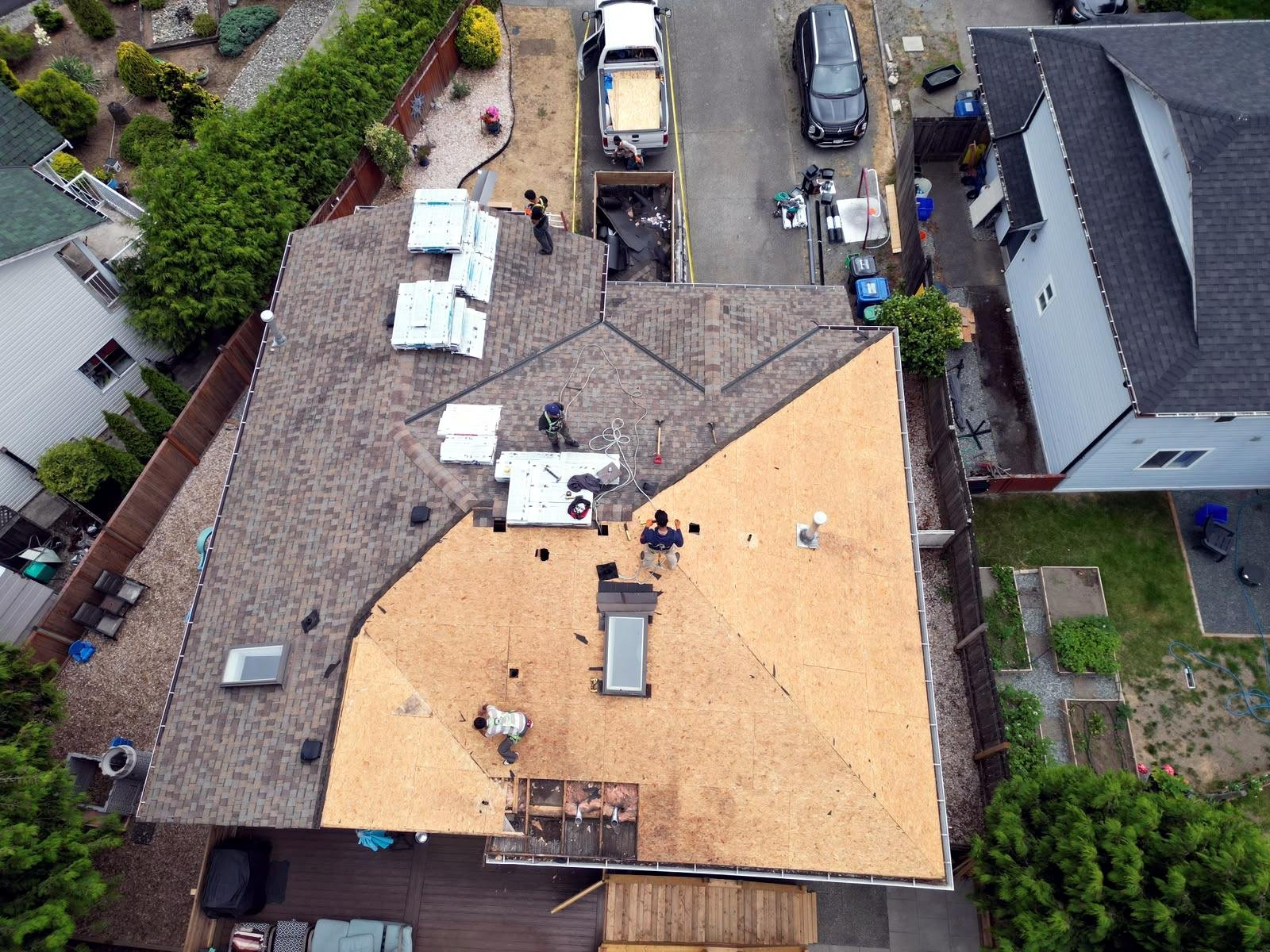
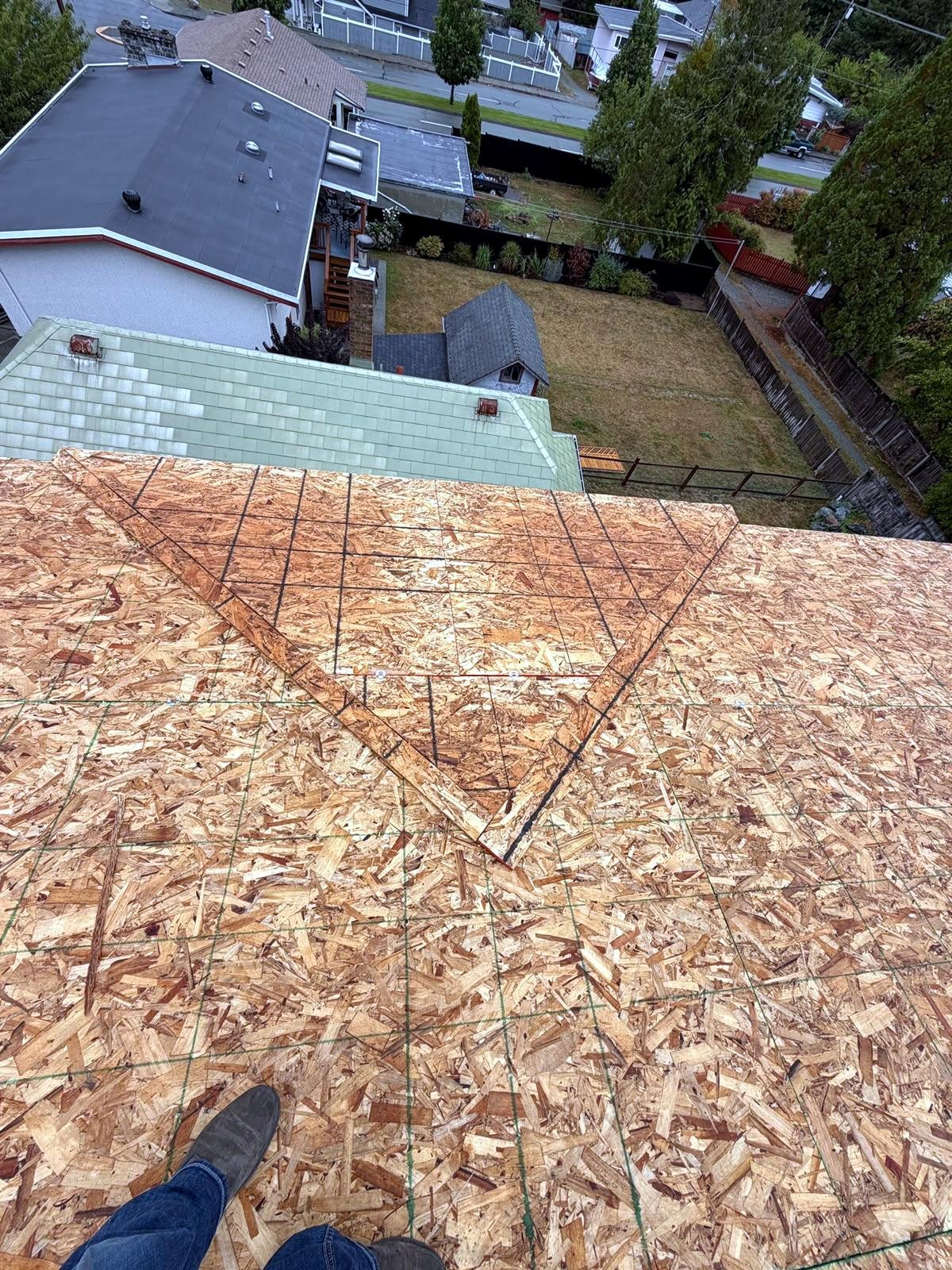
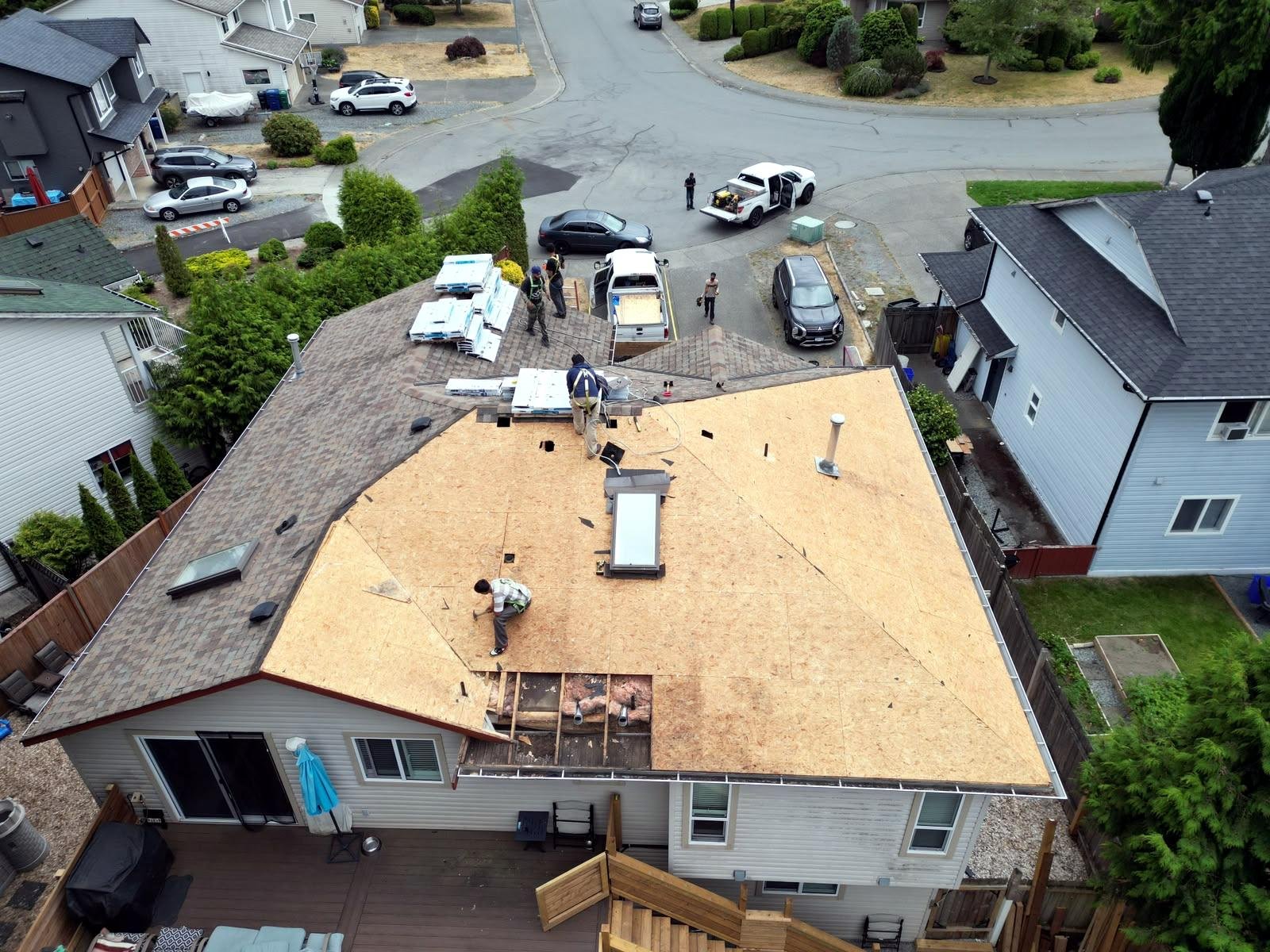
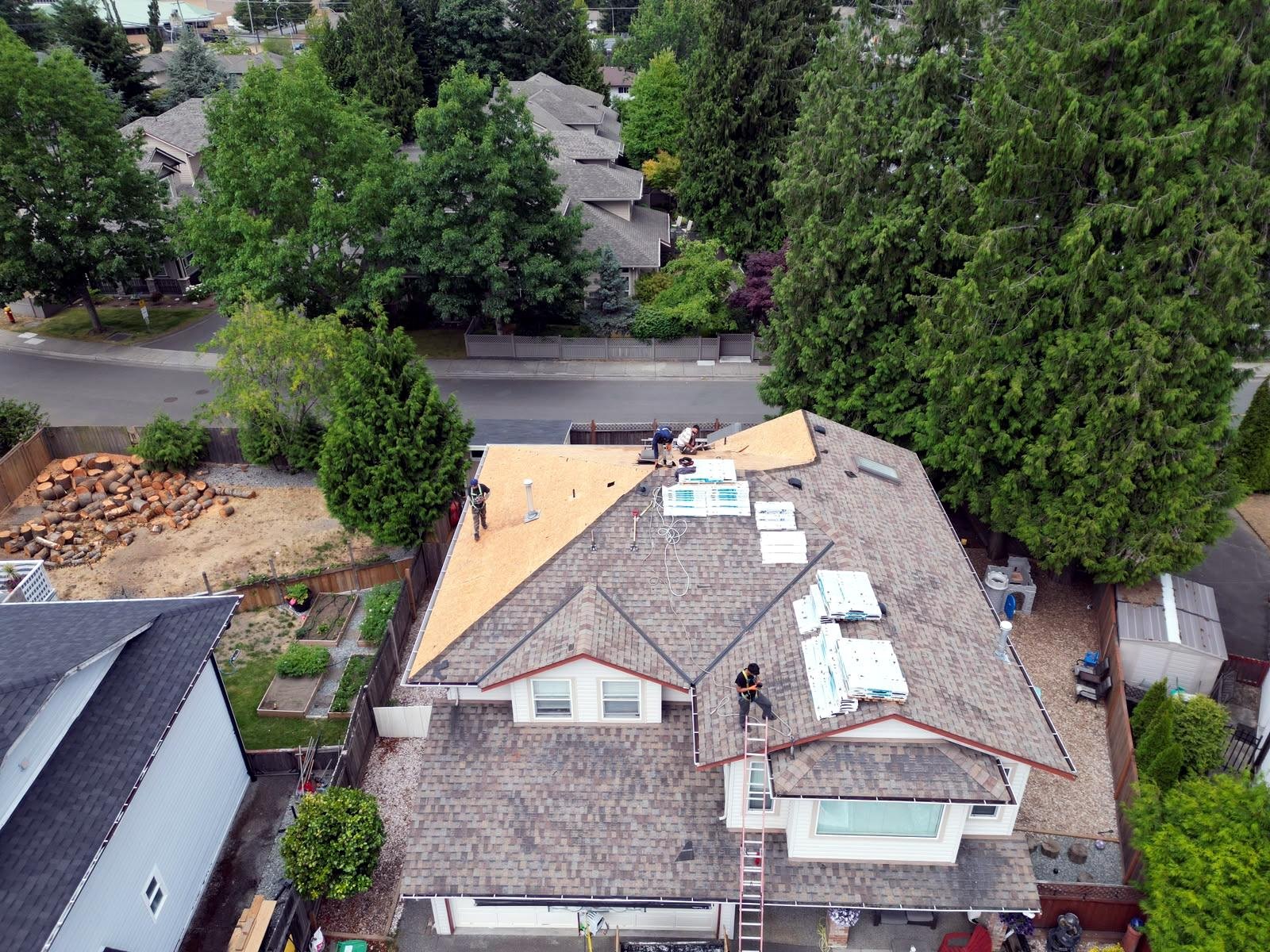
A roof replacement is the best time to fix a ventilation problem, because the roofer has full access to the deck, the eaves, and the ridge. Adding a ridge vent, opening up blocked soffits, or rebalancing the intake and exhaust is straightforward while the old roofing is off, and far harder once a new roof is in place. That is why a good roofing quote for a replacement in Nanaimo should include a ventilation assessment, not just a price for the shingles or membrane.
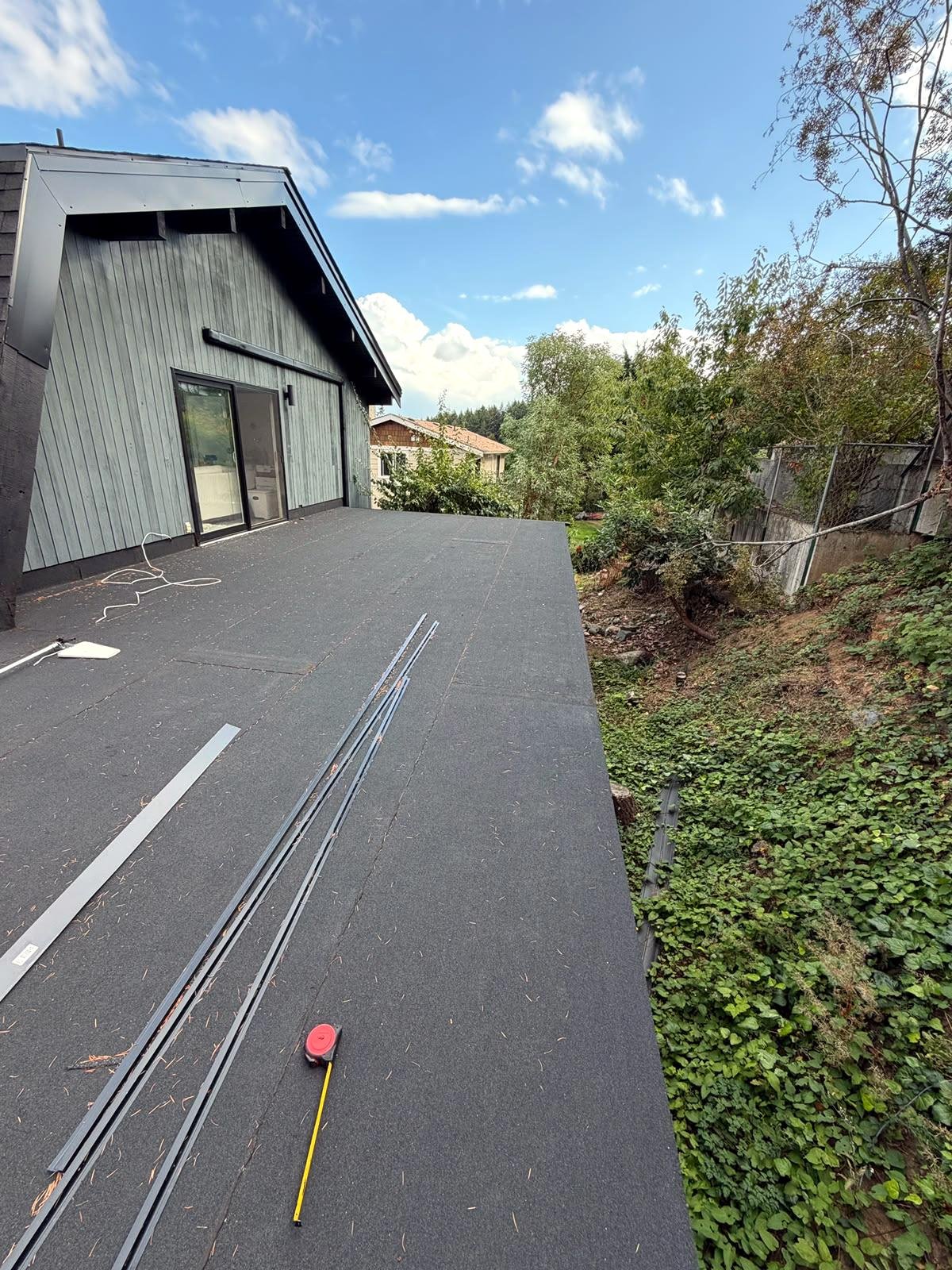
The roofing material you choose also affects ventilation. Metal roofing sheds water fast and handles our wet climate well, but it still needs the same airflow underneath to manage condensation, and the vent details differ from those on a shingle roof. Flat and low-slope roofs need a different approach again, because there is no high ridge for warm air to exit through. Whatever the material, the principle is the same: the roof assembly has to breathe. Our guide to how long a roof lasts on Vancouver Island explains how ventilation, material, and climate work together to decide the real service life of a roof.
What a ventilation check involves
A proper ventilation check takes less than an hour and covers both the inside and the outside of the roof. From inside the attic, the roofer looks for staining, mould, and damp insulation, checks whether the soffit vents are open and clear of insulation, and confirms that bathroom and kitchen fans are vented outside rather than into the attic. From outside, the roofer checks the ridge vent, the soffit vents, and the flashings, looks for corroded or damaged vents, and checks whether the vent area is balanced between intake and exhaust.
What comes out of that check is usually one of three answers. Sometimes the system is fine and the signs have another cause, such as a small leak or a bathroom fan that needs rerouting, and the fix is simple. Sometimes the vents are there but blocked, and clearing the soffits or replacing a corroded vent solves the problem without major work. And sometimes the system was never adequate for the house, in which case the fix is a proper rebalancing, often done as part of a reroof. In each case, the check itself is what matters: guessing at ventilation from the ground, or adding vents without checking the balance, can waste money and leave the real problem in place.
Getting your roof ventilation checked in Nanaimo
Roof ventilation is easy to ignore because it is invisible. There is no vent to admire from the street and no obvious moment when it fails. But in a climate as wet as coastal BC, it is one of the main things standing between a roof that lasts its full life and one that rots from the inside out. A yearly roof inspection before the fall rains catches blocked soffits, corroded vents, and early mould in a single visit, and most fixes are small when they are caught early. If your attic smells musty, your insulation feels damp, or your roof is wearing out faster than it should, the ventilation is the first thing to check.
Eco Roofing Ltd inspects and repairs roof ventilation across Nanaimo, Parksville, Duncan, Ladysmith, and Qualicum Beach, and every roof replacement we quote includes a ventilation assessment, so a new roof is never installed over a problem that would shorten its life. If you are worried about mould in the attic, damp insulation, or a roof that seems to be aging too fast, request your free quote or call (250) 240-3684 and tell us what you are seeing. We will check the ventilation, explain what we find in plain language, and tell you honestly whether it needs work or not.
Not sure what your roof needs?
Get a free inspection and an itemized written quote. No obligation, no pressure, just a straight answer from a local Nanaimo roofer.