November 9, 2026 · 9 min read · Eco Roofing Ltd, Nanaimo
A leaking roof never picks a convenient moment. On Vancouver Island it usually shows up during a November storm, late at night, or while you are away for the weekend. Water dripping through a ceiling is stressful, and the first instinct is often to panic or to climb up on the roof yourself. Neither helps. What helps is a calm, simple sequence: protect what is inside, limit the water, and get a roofer on the phone. This guide walks through exactly that sequence, so you know what to do in the first hour, what counts as a real roofing emergency, and what happens when a roofer arrives.
Most roof leaks in Nanaimo start small. A lifted shingle, a cracked flashing, a blocked valley, or a seal that has given up after years of rain can let in a surprising amount of water once a storm pushes rain sideways. The good news is that most leaks can be stopped quickly once a roofer finds the entry point, and the damage inside the house is often far smaller than the stain on the ceiling suggests, provided you act promptly. The bad news is that a leak left for weeks can rot decking, grow mould in insulation, and turn a simple repair into a much bigger job. Speed matters, but so does doing the right things in the right order.
First: stay safe and limit the damage inside
Before you think about the roof itself, deal with the water that is already inside. Safety comes first. If water is dripping near light fixtures, electrical outlets, or your breaker panel, turn off the power to that area at the breaker and keep clear of the wet spot. Water and electricity are a dangerous combination, and a ceiling full of water can also be heavy enough to collapse, so never stand directly under a bulging, sagging section of ceiling. If a ceiling is bulging with trapped water, that is a sign to call a roofer and, if the bulge is large, to keep the room clear until it has been looked at.
Move valuables and catch the drip
Move furniture, electronics, rugs, and anything you value away from the drip, and put down buckets, pots, or a large plastic bin to catch the water. A towel in the bottom of the bucket stops the splashing and the noise. If the water is coming through in one steady stream, that is actually useful information for the roofer, because it narrows down where the entry point is. Take a photo or a short video of the drip and the stain. Roofers use that to understand how the water is travelling, and your insurer may ask for it later as well.
Do not go on the roof in a storm
This is the most important rule of emergency roof repair, and it is the one people break most often. A wet roof in a storm is dangerously slippery, and Vancouver Island wind can gust hard enough to throw a person off balance. No temporary fix is worth a fall. Stay off the roof entirely until the weather clears and a professional with proper safety gear can get up there. If you can safely reach the attic from inside, a look from underneath is far more useful and far safer. From the attic you can often see daylight, wet insulation, or a stain trail that points to the entry point, and you can place a bucket or a tarp under the drip to protect the ceiling below.
Relieve a bulging ceiling carefully
If water is pooling above a ceiling and the drywall is sagging, the weight can bring a whole section down at once. If you are comfortable doing so, you can relieve the pressure by poking a small hole in the lowest point of the bulge with a screwdriver, with a bucket underneath to catch the water. Keep the hole small and do it from the side, not from directly underneath. This is a temporary measure to prevent a collapse, not a repair, and it does not fix the leak. If you are unsure, leave it and call a roofer.
How to find where the leak is coming from
The stain on your ceiling is rarely directly below the hole in the roof. Water runs along rafters, decking, and the underside of the membrane before it finds a way down, so the entry point can be several feet away, usually uphill from the stain. That is why a leak can be so hard to find, and why guessing often leads to patching the wrong spot. A roofer starts by working backwards from the stain, checking the roof uphill from it, and paying close attention to the usual suspects.
Flashings are the number one source of leaks on Vancouver Island homes. These are the metal strips that seal the joints where the roof meets a chimney, a skylight, a vent pipe, or a wall, and they take the most punishment from wind-driven rain. A flashing that has lifted, cracked, or lost its seal will let water straight in. Valleys, where two roof slopes meet, are the next most common spot, because they carry the most water during heavy rain and any debris in a valley can dam the flow and push water under the shingles. Pipe boots, the rubber collars around vent pipes, also crack with age and sun exposure, and are a frequent, easy-to-miss source of leaks. Finally, a roofer will check for missing or lifted shingles, damaged ridge caps, and any place where a satellite dish, solar panel, or old antenna was fastened through the roof.
If your roof is older, the leak may not be a single failed detail at all. It may be that the roofing material itself has reached the end of its service life, and water is finding its way through worn shingles or a tired membrane in several places at once. Our guide to the 7 signs you need a new roof in Nanaimo explains how to tell the difference between a roof that needs a repair and one that is simply worn out.
What counts as a roofing emergency?
Not every leak needs a roofer at midnight, but some do, and knowing the difference saves you stress and helps the roofer prioritise. A roofing emergency is any situation where water is actively entering the home and causing damage, or where the roof has been damaged in a way that leaves the home exposed to the next rain. If water is pouring in, if a section of roof has been torn off by wind, if a tree has fallen on the roof, or if the ceiling is sagging under trapped water, that is an emergency and you should call a roofer right away, whatever the hour.
- Water actively dripping or streaming into a living space, especially near wiring or light fixtures.
- A section of shingles, membrane, or flashing torn off or hanging loose after a windstorm.
- A tree limb or large branch through the roof, or a visible hole in the roof surface.
- A ceiling bulging or sagging with trapped water, which can collapse without warning.
- A leak over a bedroom, kitchen, or any room with expensive contents that cannot be moved.
- Water running down an interior wall, which often means the leak has been going on longer than you think.
- A flat roof with ponding water and a visible split or lifted seam in the membrane.
A slow drip that only appears in very heavy rain, a small stain that has been there for a while without growing, or a leak in an unused room where the water can be caught in a bucket, is still a problem that needs fixing, but it can usually wait for the next business day. The key test is simple: is water entering the home right now, and is it getting worse? If yes, treat it as an emergency. If you are unsure, call and describe what you see. A good roofer would rather hear from you early than arrive to a much bigger problem a week later.
What a roofer does on an emergency call
An emergency roof repair visit has one goal: stop the water, fast, and make the roof watertight until a permanent repair can be done properly. The roofer will start by inspecting the roof from the outside and, if it is safe, from the attic as well, to locate the entry point. In bad weather, the inspection may be limited to what can be seen safely from a ladder, and the full diagnosis may wait until the rain eases. That is normal, and it is better than a roofer taking risks on a wet roof in a storm.
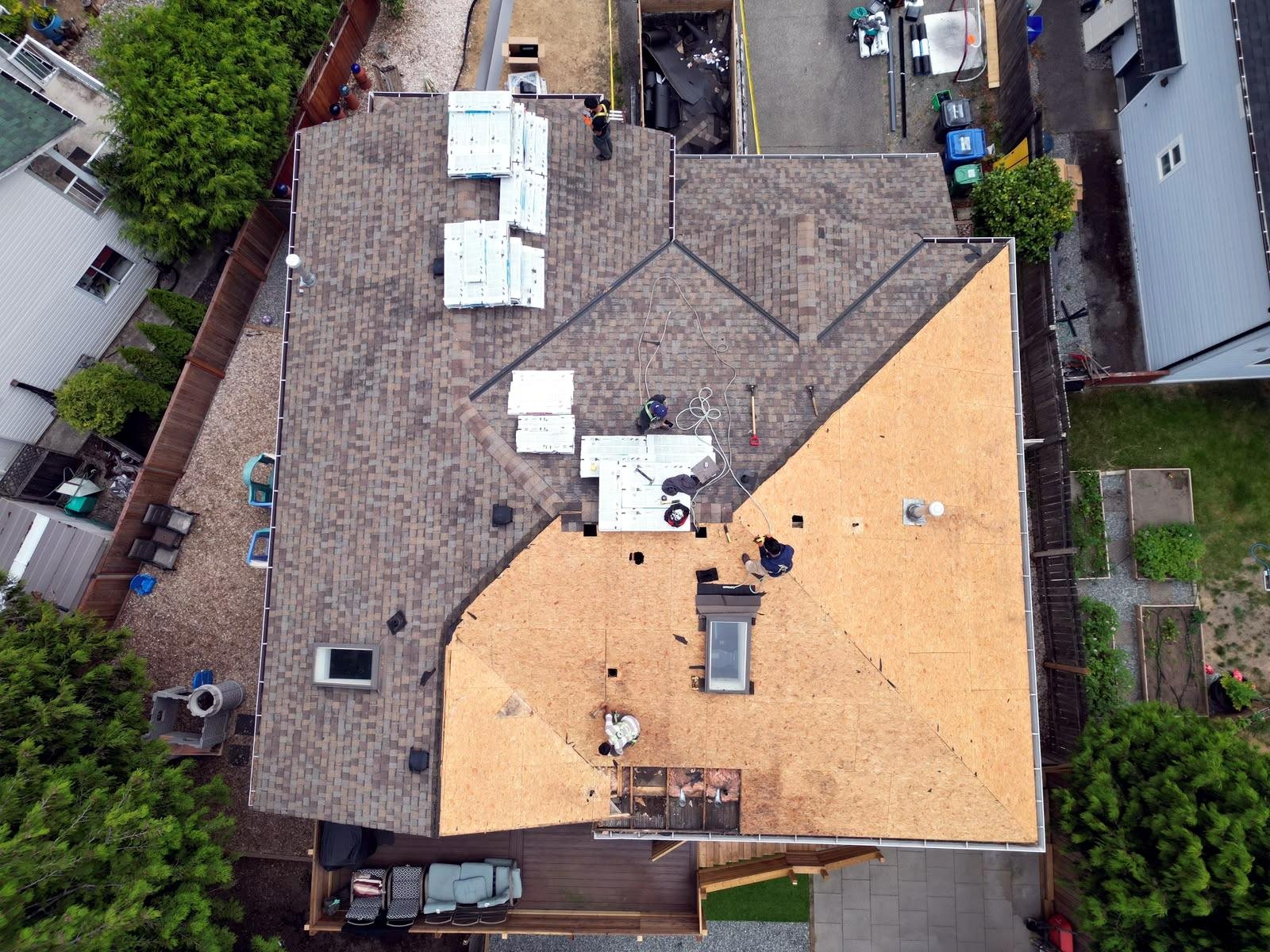
The temporary repair usually involves a tarp, a patch, or a reseal, depending on what is damaged. A heavy-duty tarp, properly secured and weighted so it cannot blow off, can keep a damaged section dry through a storm. A lifted flashing can be refastened and sealed. A small hole or split can be patched with roofing cement and a patch of matching material. These are stopgap measures, and an honest roofer will tell you so: they buy time, they do not replace a proper repair. Once the weather clears, the roofer returns to do the permanent fix, which may mean replacing a section of shingles, renewing a flashing, or replacing a damaged piece of decking.
The question to ask before any emergency repair
Ask what the temporary fix covers and what the permanent repair will involve, and get both in writing. A tarp or a patch stops the water, but you should know what comes next, and when, before the roofer leaves.
Temporary fixes that help, and ones that hurt
Inside the house, the best temporary measures are simple: buckets, towels, plastic sheeting over furniture, and, if you can reach the attic safely, a tarp or a bin under the drip to protect the ceiling and insulation. Moving wet insulation aside so it can dry, or removing a soaked section, can also prevent mould from taking hold, but wear gloves and a mask, and do not disturb insulation that looks like it could be vermiculite or asbestos in an older home. If your home was built before the mid-1980s, leave suspect insulation alone and let a professional handle it.
What does not help is sealing the leak from the inside with caulk, foam, or roofing tar applied to the underside of the deck. It might slow the drip for a day, but it traps water inside the roof assembly, hides the real problem from the roofer, and can make the eventual repair harder and more expensive. The same goes for nailing a tarp down through the shingles from on top of the roof yourself: every nail hole is a new potential leak. Leave the roof surface to the roofer. Your job in the first hour is the inside of the house, not the outside.
After the emergency: repair or replace?
Once the water is stopped, the real question is whether the roof needs a repair or a replacement. A single, clearly identified failure, a cracked flashing, a torn shingle, a split pipe boot, on a roof that is otherwise in good shape, is a repair, and a good repair can last for years. But if the roofer finds that the roof is worn across its whole surface, that the decking is soft in several places, or that leaks are appearing in more than one area, a replacement may be the honest recommendation. Patching a worn-out roof one leak at a time costs more over a few years than replacing it once, and each new leak risks more interior damage in between.
Age is the biggest factor. A shingle roof in Nanaimo that is well into its third decade, a flat roof membrane that has lost its granule surface, or a cedar roof that has gone soft and thin, will keep producing leaks no matter how well each one is patched. Our guide to roof replacement vs repair in Nanaimo walks through how roofers weigh age, condition, and the number of problem areas when they make that call. If replacement is recommended, ask the roofer to show you the evidence: photos of the worn areas, the soft decking, or the failed material, so you can see the reasoning for yourself.
How to prevent the next emergency
Most roof emergencies are not sudden. They are the end of a slow process that could have been caught earlier, and a little routine care goes a long way on Vancouver Island. The single most useful habit is a professional roof inspection once a year, ideally before the fall rains arrive. A roofer will check flashings, seals, valleys, and the condition of the roofing material, and catch the small failures that become emergencies in a January storm. Between inspections, keep gutters and downspouts clear so water can get off the roof instead of backing up under the shingles, and trim back any branches that overhang the roof, since they drop debris, rub shingles in the wind, and can fall in a storm.
Moss deserves a mention too, because it is a slow-motion emergency in our climate. Heavy moss holds moisture against the roof, lifts shingles, and accelerates wear, especially on north-facing slopes and shaded sections. A gentle treatment and regular clearing will keep it from becoming a problem. Our roof maintenance tips for Vancouver Island rain cover the seasonal routine in detail, and it is the cheapest insurance a roof can have.
Getting emergency roof repair in Nanaimo
When you call a roofer about a leak, be ready to describe what you see: where the water is coming in, how much there is, whether it is worse in heavy rain, how old the roof is, and what type of roof it is. Photos of the stain, the drip, and the roof from the ground all help. A good roofer will ask these questions, explain what they can do on the first visit, and give you a clear picture of the temporary fix and the permanent repair that follows. They should also be clear about response time: in a storm, roofers prioritise the worst leaks first, so a steady drip in a spare room may wait a few hours behind a roof that has lost a section to the wind, and that is fair.
Eco Roofing Ltd provides emergency roofing across Nanaimo, Parksville, Duncan, Ladysmith, and Qualicum Beach, and our crews are used to Vancouver Island storm work. If your roof is leaking, request your free quote or call (250) 240-3684, and tell us what you are seeing. The sooner we can get to it, the smaller the repair, and the less damage the water does inside your home.
Not sure what your roof needs?
Get a free inspection and an itemized written quote. No obligation, no pressure, just a straight answer from a local Nanaimo roofer.