October 28, 2026 · 8 min read · Eco Roofing Ltd, Nanaimo
Most Vancouver Island homeowners choosing a new roof end up deciding between two materials: asphalt shingles and metal. Shingles cover the majority of homes here, and for good reason. Metal is growing fast, especially on newer builds and waterfront properties. Both are proven materials, and both can be the right choice, but they suit different homes, budgets, and priorities.
This comparison is written for our climate specifically: heavy winter rain, moss-friendly shade, coastal wind, and salt air near the ocean. A roofing guide written for a dry inland climate will not help you much here. What follows is an honest look at how each material performs on the Island, so you can decide with clear eyes rather than sales talk.
Lifespan: the biggest difference
Lifespan is where metal pulls clearly ahead. A quality metal roof lasts 40–70 years, which for many homeowners means installing it once and never re-roofing again. Asphalt shingles last a much shorter time, and on the Island their life is often shortened further by moss, moisture, and shade. That difference shapes everything else in this comparison, because a roof you replace twice costs more in total than a roof you install once, even if the first quote is lower.
Think about how long you plan to stay in your home. If you expect to move within a few years, the lower up-front cost of shingles may make more sense. If this is your long-term home, or a home you plan to pass on, metal's lifespan becomes a strong argument. It is also worth considering resale: buyers in competitive Nanaimo and Parksville markets notice a metal roof, and it signals a home that will not need major roofing work for decades.
Rain and moss performance
Our Island winters bring months of rain, and that is where metal earns its keep. Its smooth surface sheds water quickly, and moss and algae struggle to take hold on it. Shingles, by contrast, have a textured surface that holds moisture and gives moss something to grip. Homes under heavy tree cover in the Island interior often spend money every year fighting moss on a shingle roof, with cleaning and treatments that add up over time.
That does not mean shingles fail in the rain. A properly installed asphalt shingle roof with good underlayment and flashing handles Island rain well. It just needs more attention: moss control, gutter cleaning, and periodic checks. Metal asks less of you year to year, which matters if your roof is steep, hard to access, or shaded by trees.
Gutters and drainage play a supporting role for both materials. A roof can only shed water as fast as the gutters carry it away, so clogged or undersized gutters cause water to back up no matter what the roof is made of. If your gutters overflow in heavy rain, that is a drainage problem worth fixing alongside any roofing work, and it protects whichever material you choose.
Wind, fire, and noise
Wind is a real consideration on the coast. Interlocking standing-seam metal panels are engineered for severe wind and driving rain, and they perform very well in coastal BC storm seasons. Architectural shingles also hold up well when installed properly, but individual shingles can lift or blow off in a serious storm, and repairs are more common after big wind events.
Fire rating favours metal. Metal carries a Class A fire rating, the highest available, which is a meaningful advantage for rural and forested properties around Duncan and Ladysmith, and for any home near interface areas. Asphalt shingles can also achieve good fire ratings depending on the product, so check the specific shingle you are considering rather than assuming.
Noise is the question everyone asks about metal, and the honest answer is that a modern metal roof is no louder than shingles in the rain. Solid sheathing, quality underlayment, and attic insulation absorb the sound. Older metal roofs on barns and sheds, installed over open framing with no insulation, are where the noisy reputation comes from. A residential metal installation over a proper deck sounds like any other roof during our heaviest Island downpours.
Cost over a lifetime, not just on day one
Metal costs more up front than shingles. There is no way around that, and any honest comparison should say so plainly. The case for metal is not that it is cheaper, it is that it can be cheaper over the life of the home. A shingle roof will likely need replacing at least once, and possibly twice, in the time a metal roof keeps working. Each replacement brings another round of tear-off, disposal, labour, and disruption.
Shingles also carry ongoing costs that metal largely avoids: moss treatments, more frequent inspections, and storm repairs. None of these are enormous on their own, but they add up over decades. When you compare the two, look at the total picture: the first installation, the likely replacements, and the maintenance in between. Then decide which profile fits your budget and your plans for the home.
Looks and maintenance
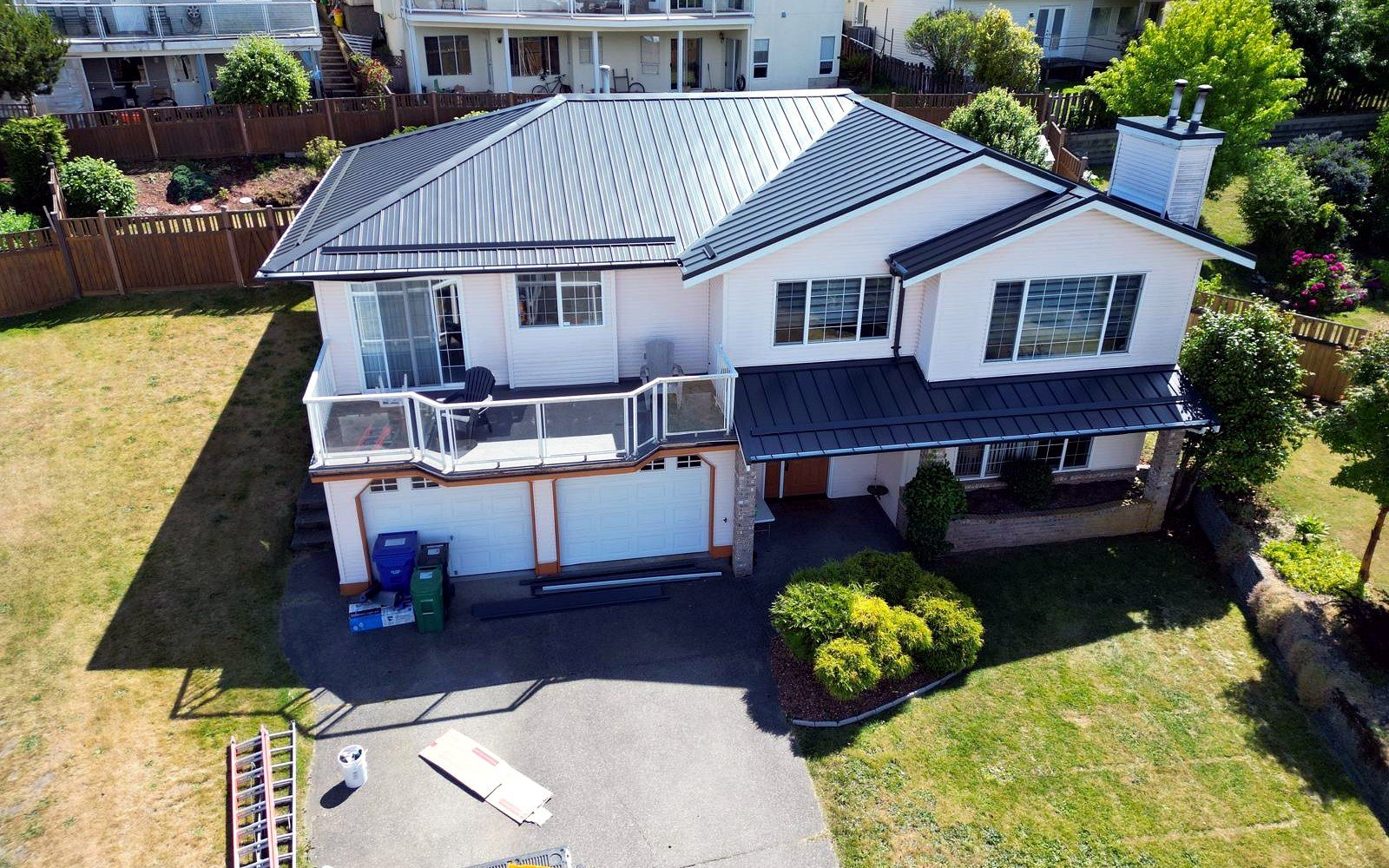
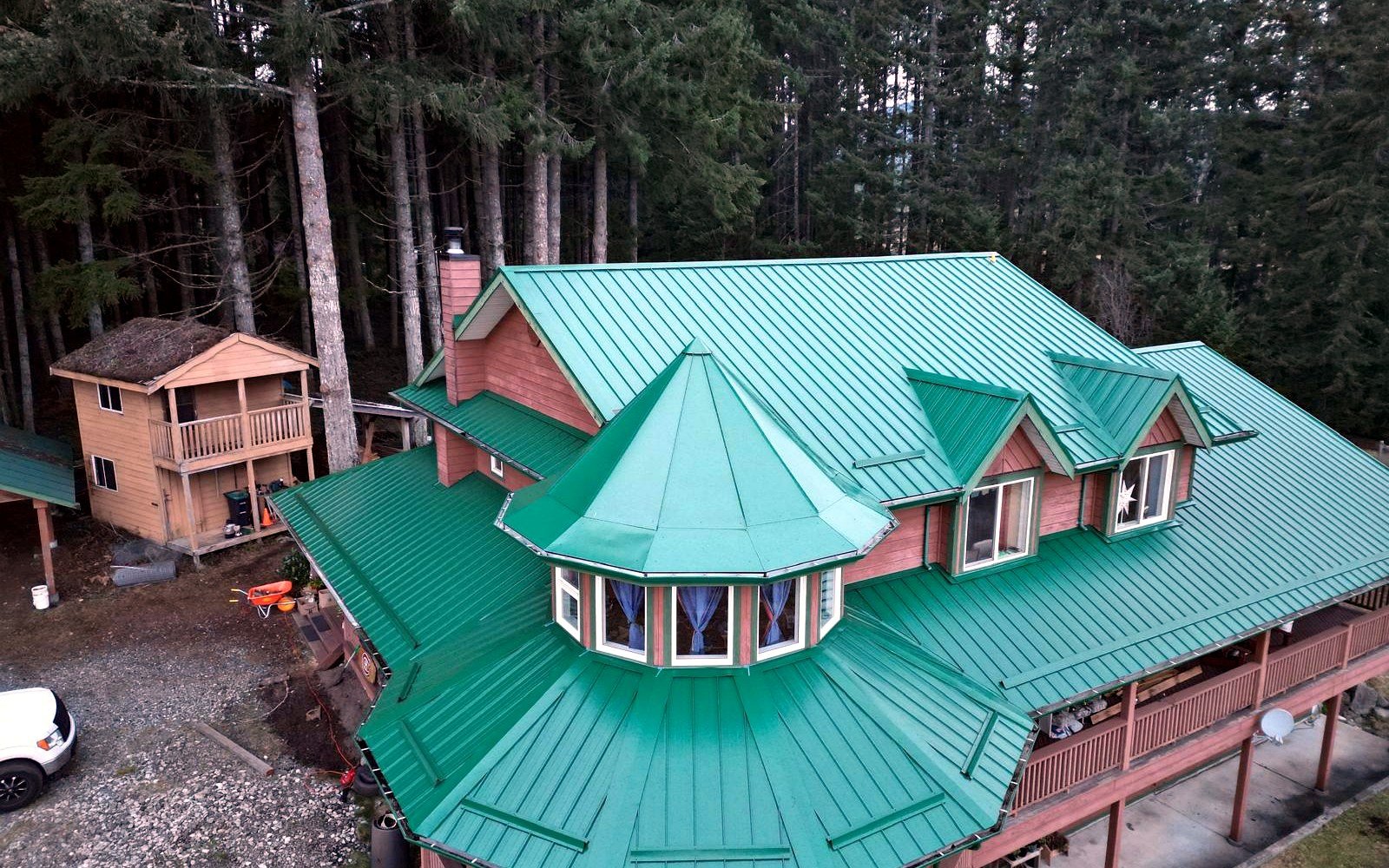
Looks are personal, and both materials have come a long way. Architectural shingles mimic the texture of wood shake and come in a wide range of colours, which is one reason they remain popular. Metal now comes in dozens of colours too, from charcoal, slate, and matte black to forest green, deep red, and coastal blues, and standing seam gives a clean, modern line that suits contemporary homes especially well.
Maintenance is lighter with metal. It needs occasional checks of fasteners, flashing, and sealants, but no moss treatments and no granular loss to watch for. Shingles need more regular attention: keeping them clear of moss and debris, watching for lifted or curled shingles, and keeping gutters clear so water does not back up under the edges. Neither material is maintenance free, but metal asks less of you.
Colour is another long-term consideration. Metal finishes are designed to hold their colour for decades, while shingles can fade and lose granules over time, especially on south-facing slopes that take the most sun. If the look of your roof matters to you, ask to see samples that have weathered a few Island winters, not just fresh samples. How a material ages is just as important as how it looks on day one.
One more practical point: think about what is underneath. Both materials need a solid, dry deck and proper underlayment to perform well. If your deck has rot or your attic lacks ventilation, those problems should be fixed no matter which material you pick, because a new roof over a damaged deck will not last as long as it should. A good inspection covers the deck and ventilation before it recommends a material.
Salt air near the ocean
If your home is near the water, salt air deserves special attention. Quality coated steel with a good finish resists corrosion well, and for direct waterfront exposure, aluminum panels offer superior resistance against ocean spray. Eco Roofing Ltd matches the material to your distance from salt water, because the right metal for a home in Departure Bay is not necessarily the right metal for a home inland. Metal roofing systems are chosen per property for this reason.
Shingles are less affected by salt air directly, but coastal homes still face the same moss and moisture pressures as anywhere else on the Island, often more so. For oceanfront properties, the combination of wind, rain, and salt makes a strong case for metal, provided the panel material is chosen for the exposure.
The short version
Choose shingles for the lowest up-front cost and a familiar look. Choose metal if you want the longest life, the least maintenance, and the best performance in rain, moss, and coastal wind. Either way, proper installation matters more than the material alone.
Installation quality matters more than the material
Here is a truth that matters more than any comparison chart: a well-installed shingle roof will outperform a poorly installed metal roof, and vice versa. Flashing details, underlayment, ventilation, and fastener placement decide whether a roof leaks or lasts, regardless of what sits on top. Metal in particular demands experienced installers, because panels must be measured, cut, and fastened precisely, and flashing around valleys and penetrations leaves little room for error.
When you get quotes, ask who will actually be on your roof and how much experience they have with the material you are choosing. Ask to see recent local work in that material, and ask what the workmanship warranty covers. A contractor who is confident in their crew will answer these questions directly. Eco Roofing Ltd installs both materials with its own licensed and insured crews, and every job comes with an itemized written quote so you know exactly what is included before work starts.
Which one fits your home?
There is no single right answer, and any roofer who tells you otherwise is selling, not advising. Consider your budget, how long you plan to stay, how much maintenance you are willing to do, and what your home faces: trees, wind exposure, salt air, or wildfire interface. A home under heavy shade with a steep, hard-to-reach roof leans toward metal. A straightforward roof on a home you plan to sell in a few years may suit shingles perfectly.
- Staying long term, want the lowest lifetime cost, hate roof maintenance: lean metal.
- Selling soon, working to a tighter budget, prefer a traditional look: lean shingles.
- Waterfront or high wind exposure: metal, with the panel material matched to salt exposure.
- Heavy tree cover and shade: metal resists moss far better than shingles.
- Rural or interface property: metal offers a Class A fire rating advantage.
The best next step is a free inspection. A roofer can look at your roof, your attic, and your exposure, show you samples of both materials, and give you an itemized written quote for each option so you can compare them on your actual home rather than in the abstract. Eco Roofing Ltd serves Nanaimo, Parksville, Duncan, Ladysmith, and Qualicum Beach. Request your free quote or call (250) 240-3684 to talk through the options for your roof.
Not sure what your roof needs?
Get a free inspection and an itemized written quote. No obligation, no pressure, just a straight answer from a local Nanaimo roofer.