October 20, 2026 · 9 min read · Eco Roofing Ltd, Nanaimo
Flat roofs are everywhere in Nanaimo, on home additions, garages, carports, and commercial buildings across the city. They look simple, but they are actually the most demanding roofs to get right, especially in a climate that delivers as much rain as ours. On a pitched roof, gravity does most of the work, shedding water quickly. On a flat or low-slope roof, water lingers, and every seam, drain, and edge detail has to be perfect or it will find its way in. If you are choosing a flat roofing system, or wondering whether your existing one is still doing its job, it helps to understand the two main options: torch-on modified bitumen and membrane systems.
Why Flat Roofs Need Special Attention in Nanaimo
A flat roof is never truly flat. It is built with a slight slope, usually toward drains or scuppers, but that slope is gentle, so water moves slowly. In Nanaimo, where heavy rain can fall for days, a flat roof may hold standing water for hours after a storm. That is normal in small amounts, but if water ponds for days, it stresses seams, adds weight, and accelerates wear. Add in our mild, damp winters, which encourage moss and algae growth on any surface that stays wet, and you can see why flat roofs need more attention than pitched ones. The good news is that a well-designed, well-installed flat roof handles all of this just fine. The key words are well-designed and well-installed.
Torch-On Roofing (Modified Bitumen)
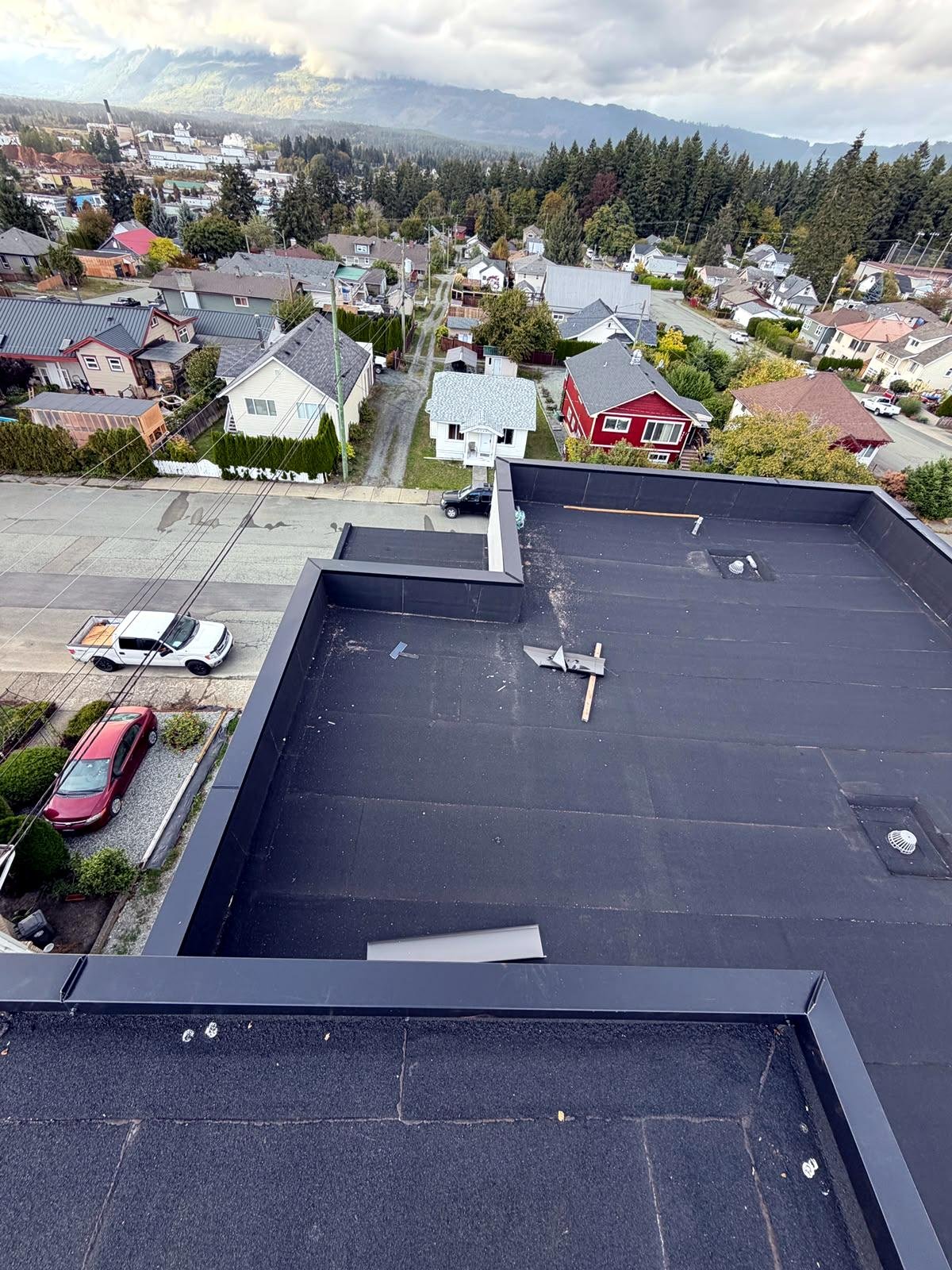
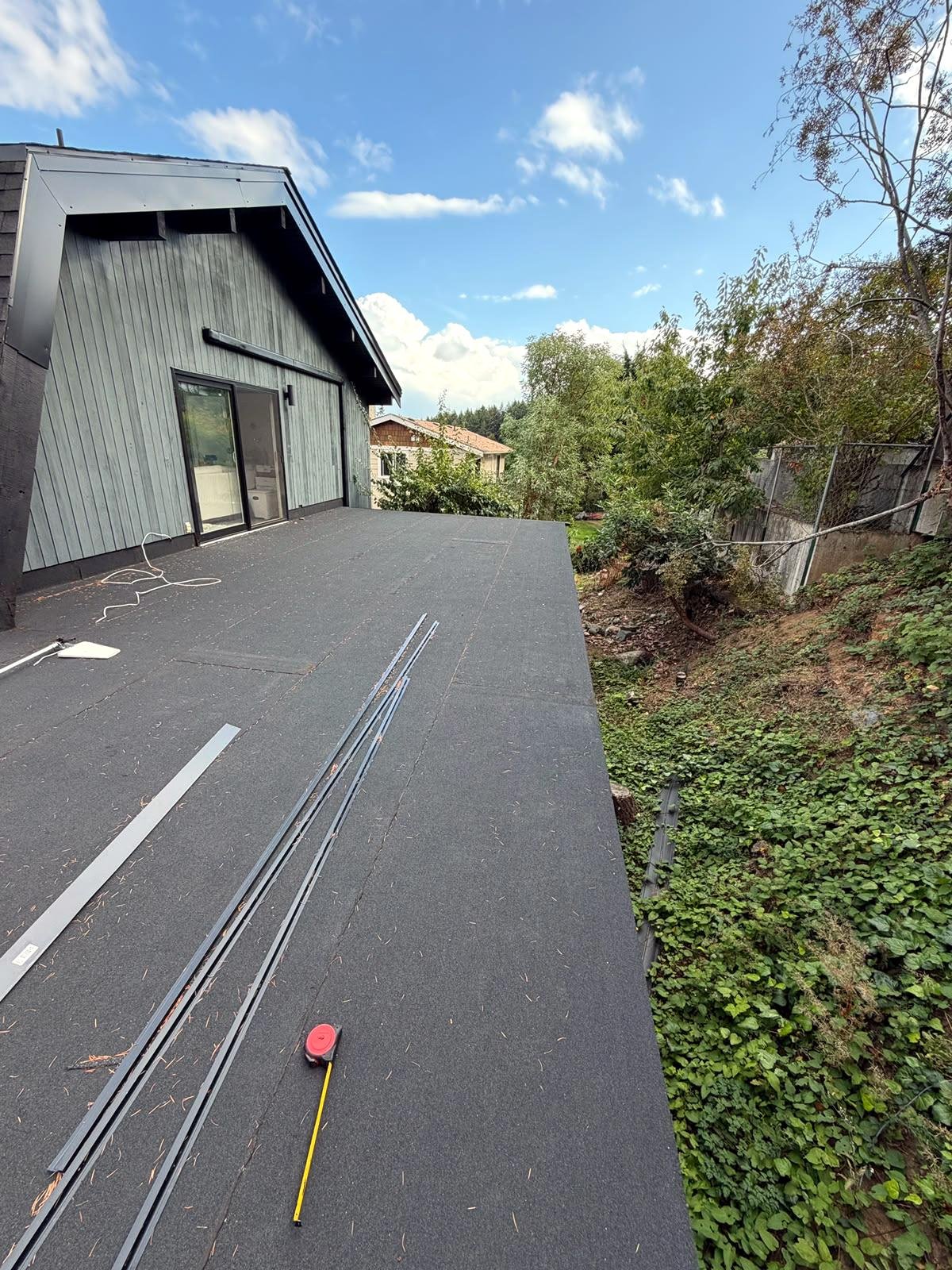
Torch-on roofing, also called modified bitumen, is the most common flat roofing system on Island homes, and for good reason. It is made of asphalt that has been modified with polymers to make it more flexible and durable, reinforced with fibreglass or polyester, and finished with a mineral cap sheet. During installation, the roofer uses a propane torch to heat the underside of each sheet so it bonds firmly to the layer below, creating a continuous, watertight surface. The result is a tough, multi-layer system that handles foot traffic well and can be repaired in sections if damage occurs. If you want to see what a finished torch-on roof looks like, our torch-on roofing page shows recent local work.
How Torch-On Is Installed
A torch-on system is usually built up in layers. A base sheet goes down first, followed by one or more plies, and finally a cap sheet with a granulated or smooth finish. Each layer is torched into place, and seams are overlapped and sealed with heat, which creates a strong bond. Flashing around edges, drains, vents, and walls is done with the same material, so the whole system is consistent. Installation requires skill and care, because the torch work has to be even and thorough. Done properly, the seams are among the strongest in flat roofing. Done poorly, they are the first place to fail, which is why it pays to hire a crew with real flat roofing experience.
- Tough and puncture-resistant, which suits roofs that get occasional foot traffic for maintenance.
- Multi-layer construction means a single damaged layer does not necessarily mean a leak.
- Repairs are practical: damaged sections can often be patched or re-torched without replacing the whole roof.
- Proven in Island conditions, with a long track record on homes and small commercial buildings.
- The granulated cap sheet provides good grip and UV protection.
Membrane Roofing Options
Membrane roofing covers a family of single-ply systems, most commonly TPO and EPDM rubber. Instead of multiple torched layers, a membrane roof is typically a single large sheet, or several wide sheets with heat-welded or adhered seams, laid over insulation and a cover board. Membrane systems are popular on larger commercial roofs because they go down quickly over big areas and create very few seams. They are also lighter than multi-layer torch-on systems, which can matter on buildings where structural load is a concern. Our flat roofing page covers the full range of systems we install and repair.
Single-Ply Membranes: TPO and EPDM
TPO is a white or light-coloured sheet that reflects sunlight, which can help keep a building cooler in summer. Its seams are heat-welded, which creates a strong, consistent bond when done properly. EPDM is a black rubber membrane known for flexibility, which helps it handle temperature changes and building movement without cracking. Both are installed either mechanically fastened, fully adhered, or held down with ballast, depending on the building and the system. Each has its strengths, and the right choice depends on the roof size, shape, budget, and how the building is used.
Built-Up and Other Systems
Beyond torch-on and single-ply membranes, there are other flat roofing approaches, including traditional built-up roofing with alternating layers of felt and asphalt, and liquid-applied coatings that can sometimes extend the life of an existing roof. Built-up roofing is heavier and more labour-intensive, so it is less common on residential work today, but it still has a place on some commercial buildings. Liquid coatings are not a new roof, but they can be a sensible option for a roof that is fundamentally sound and just needs renewed waterproofing. A roofer who works with all of these systems can give you an honest comparison for your specific roof, rather than pushing the one system they happen to sell.
Drainage: The Make-or-Break Detail
Whatever system you choose, drainage decides whether it lasts. A flat roof needs a clear path for water to leave, through internal drains, scuppers, or a gentle slope to the edge. In Nanaimo, drains and scuppers clog with leaves and needles just like gutters do, and a clogged flat roof drain is worse than a clogged gutter, because the water has nowhere else to go. Check drains and scuppers at least twice a year, and after any big storm. Look for ponding that lasts more than a day or two after rain stops. A little standing water right after a downpour is normal, but water that is still there days later is a warning sign that the slope or drainage needs attention.
Ponding Water Deserves Attention, Not Panic
If you notice standing water on your flat roof, do not ignore it, but do not assume the roof is ruined either. Sometimes the fix is as simple as clearing a drain or adjusting a scupper. Sometimes it points to a slope problem that needs a professional look. Either way, it is worth investigating before the next big rain, not after. A free inspection can tell you which one you are dealing with.
Lifespan and Maintenance Compared
It is tempting to ask which system lasts longest, but the honest answer is that installation quality and maintenance matter more than the material label. A well-installed torch-on roof that gets regular attention will outlast a poorly installed membrane, and vice versa. That said, there are real differences in how they age and how they are maintained. Torch-on systems are forgiving to repair, since damaged areas can be patched with the same material. Membrane systems have fewer seams, which means fewer potential failure points, but a membrane puncture needs a proper patch with compatible material, not a generic sealant. Both systems need the same basic care: keep drains clear, keep the surface clean, watch the seams and flashing, and deal with ponding promptly.
- Inspect flat roofs at least twice a year, in fall and spring, plus after major storms.
- Keep drains, scuppers, and gutters clear of leaves and debris at all times.
- Watch seams, edges, and flashing for lifting, cracking, or separation.
- Remove debris and standing water promptly, and never let equipment or storage sit on a flat roof.
- Have any blistering, bubbling, or soft spots checked, since they can signal trapped moisture.
Which Suits Your Building?
Homes and Additions
For most Nanaimo homes, additions, and garages, torch-on modified bitumen is the go-to choice. It suits smaller roof areas, it handles the foot traffic that comes with gutter cleaning and maintenance, and local crews know it inside out, which means repairs down the road are straightforward. It also ties in well with the rest of the house, since flashing details around walls and existing pitched roofs are well understood. If your flat roof is a home addition or a garage, torch-on is usually the most practical and cost-effective option over the life of the roof.
Commercial Buildings
For larger commercial roofs, membrane systems often make more sense. They cover big areas quickly with fewer seams, they are lighter, and their reflective surfaces can help with cooling costs on large buildings. That said, many commercial buildings in Nanaimo also use torch-on, especially smaller ones, and the decision often comes down to the roof shape, the number of penetrations like vents and HVAC units, and how the building is used. A warehouse with a simple, open roof is a different job from a restaurant with a dozen vents and a grease exhaust. A proper assessment looks at all of that before recommending a system.
Warning Signs Your Flat Roof Is Failing
Flat roof problems often hide until they are serious, because there is no attic space to show early stains in many cases, and the roof surface is out of sight. Watch for these signs, and act on them early. If you notice any of them, do not wait for the next big storm to confirm the problem. Book an inspection and get an honest assessment of whether a repair will do or whether replacement is the smarter investment. If water is already coming in, emergency roofing help can stop the damage while a permanent fix is planned.
- Water stains on ceilings or walls below the flat roof, even small ones.
- Ponding water that remains days after rain has stopped.
- Blisters, bubbles, or wrinkles in the roof surface.
- Seams or flashing that are lifting, cracked, or pulling away.
- Soft or spongy spots when walking on the roof, which can mean the deck underneath is damaged.
- A musty smell or visible mould inside, especially near the flat roof area.
Choosing a flat roof system is not about picking a winner from a catalogue. It is about matching the right system to your building, your budget, and Nanaimo weather, and then having it installed by people who do flat roofs every week. Eco Roofing Ltd is a local, licensed and insured company with 9+ years of experience on Island roofs, and we install and repair both torch-on and membrane systems. If you are planning a new flat roof, or if your existing one is showing its age, a free inspection and itemized written quote will give you a clear picture of your options. You can start with our flat roofing page, or get in touch for a free quote and talk through your roof in person.
Not sure what your roof needs?
Get a free inspection and an itemized written quote. No obligation, no pressure, just a straight answer from a local Nanaimo roofer.